A rectangle body shape is often described with one blunt phrase: straight up and down. That shorthand misses the useful part. Straight proportions can make clothing hang cleanly, suit sharp tailoring, and leave plenty of room to decide whether you want a visible waist at all. The better question is not how to disguise a rectangle shape, but where you want an outfit to create rhythm, softness, length, or structure.
Read straight proportions before trying to change them
With a rectangle body shape, the shoulders, waist, and hips tend to sit in a similar visual width, while the waist may be less sharply indented than on an hourglass frame. That does not make every garment a blank column. Rib cages, hip curves, height, bust, and posture still change the fit. Two people can wear the same size and have very different reasons for liking a defined waist or avoiding it.
Start by looking at the garment rather than the label. A blazer that ends at the high hip draws a horizontal line there; a long open coat creates a vertical line down the center. A fitted knit can follow the torso without carving a waist, while a crisp poplin shirt may need a tuck or a belt to avoid looking borrowed. These are visual choices, not corrections.
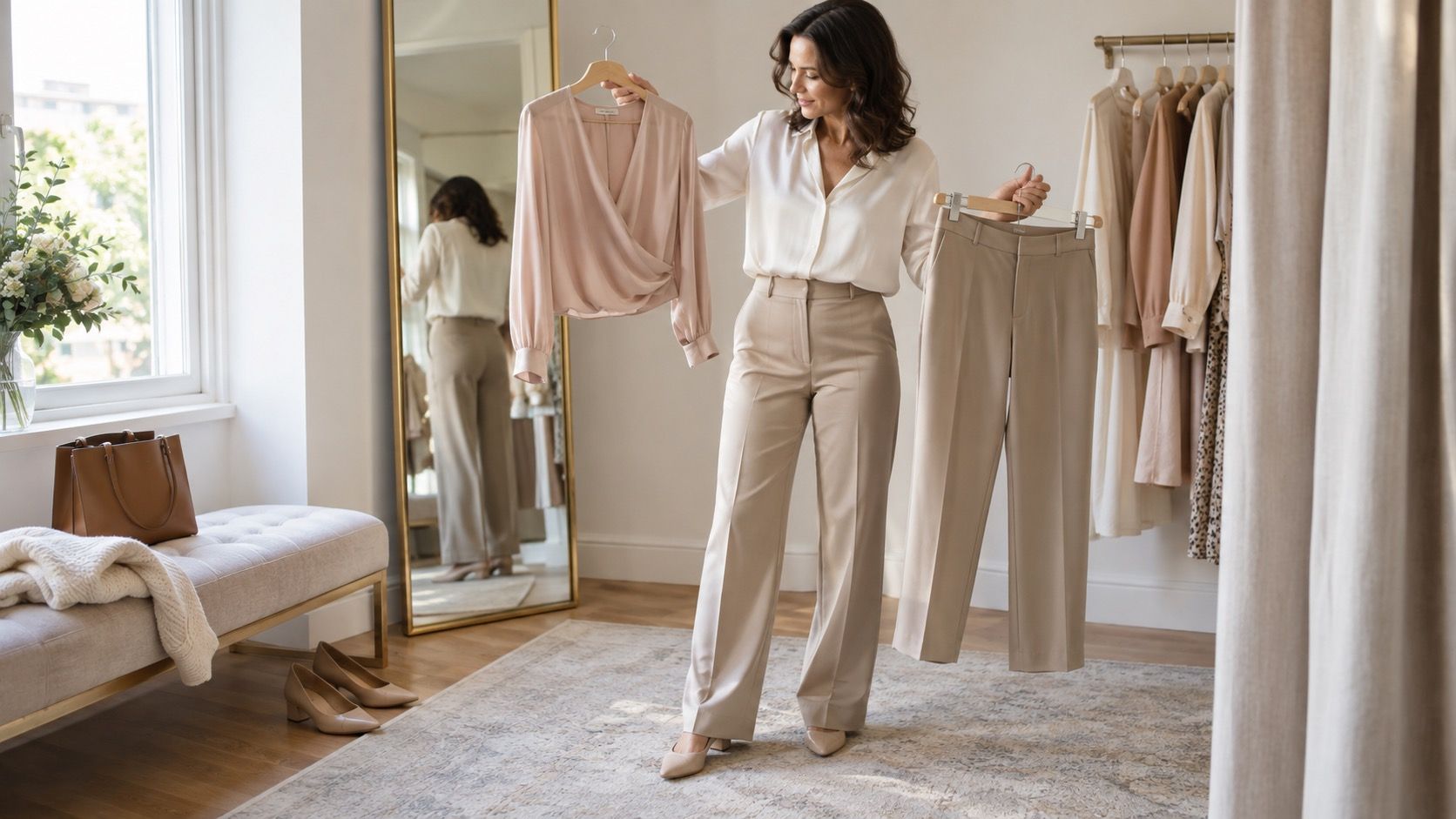
A useful fitting-room test is to take one simple outfit, such as straight trousers and a fine-gauge sweater, then change only one element. Try a half tuck, then a full tuck, then leave the sweater loose. Add a short jacket and then a longer cardigan. The difference is easier to see when only one variable moves. Photos from the front and side can help, especially when a mirror is too close to show the full line.
Use waist definition when it gives the outfit a job
Belts are often the first recommendation for how to dress a rectangle shape, but a belt is not automatically flattering just because it is narrow. Its position, contrast, and the amount of fabric around it matter more. A belt placed at the natural waist can create a clear break in a shirt dress or an oversized blazer. The same belt over a thick boxy sweater can simply add bulk and make the knit ride upward.
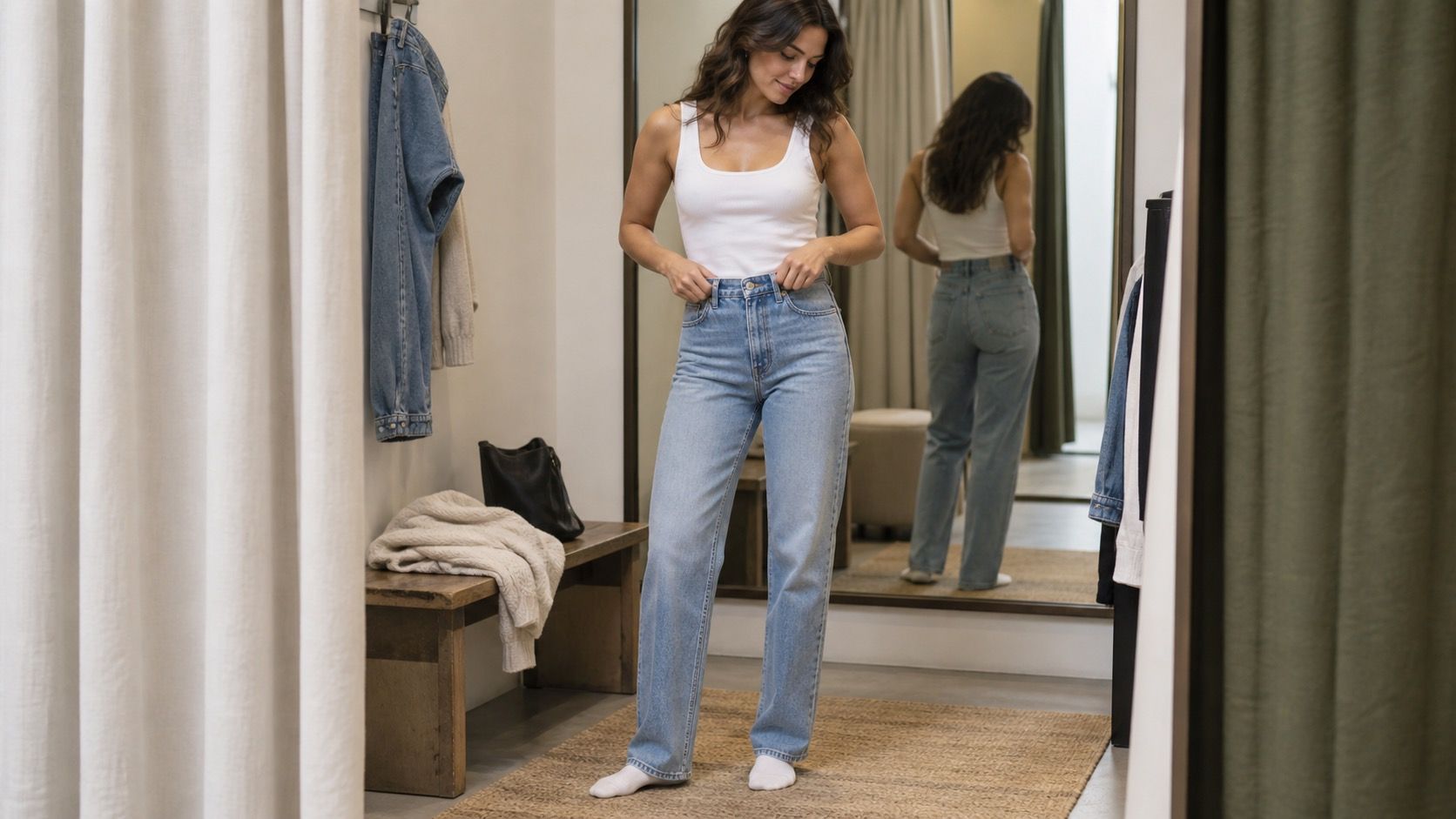
Try definition in quieter ways first. A wrap-front top, a cardigan buttoned only through the middle, or trousers with a shaped waistband can suggest a waist without drawing a hard line around it. High-rise trousers paired with a tucked tee often work because the eye reads the rise and the exposed torso as a proportion, not because the outfit has suddenly become curvy.
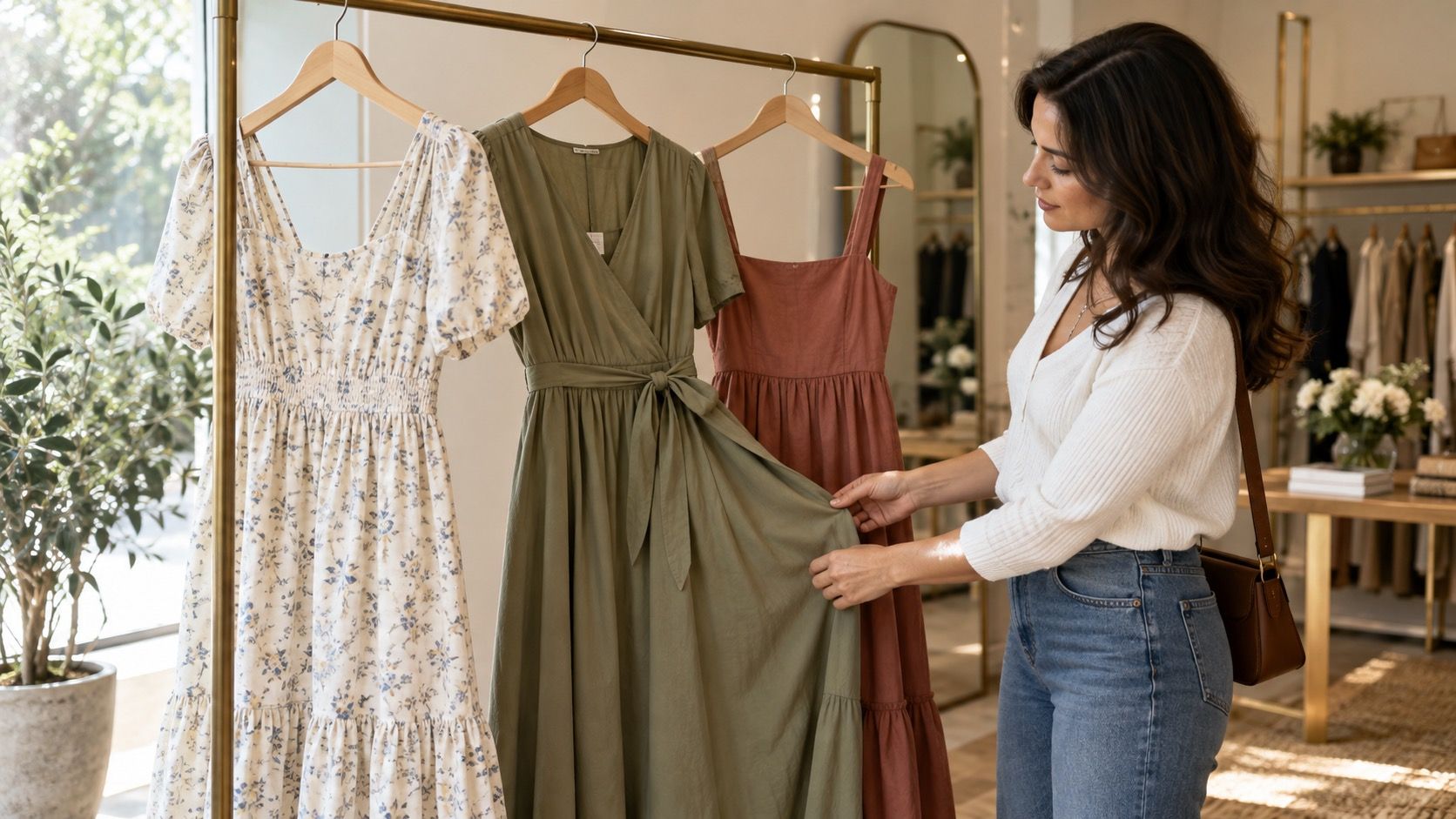
For dresses, a seam, tie, or gathering placed a little above the natural waist can lengthen the leg line. A dropped waist does the opposite: it creates an easy, modern column and can feel more comfortable on busy days. Neither is universally better. Stand, sit, raise your arms, and check whether the waist detail stays where it was meant to stay. A style that looks perfect only while motionless is usually not the practical winner.
| Styling choice | What it changes | Useful when |
|---|---|---|
| Same-color belt | Gives a gentle waist cue | You want shape without a strong break |
| High-rise trousers and a tuck | Shortens the visible torso and lengthens the leg | A top has enough softness to tuck cleanly |
| Wrap or tie-front dress | Creates adjustable definition | You need room through the bust or waist |
| Unbelted column dress | Keeps a long uninterrupted line | You prefer ease, minimalism, or a sleek layer |
Build interest with layers, texture, and contrast
Texture is especially helpful for rectangle body type outfits because it adds depth without needing extra seams. A brushed cardigan over a smooth tank, denim with a ribbed knit, or a tweed jacket over a plain jersey dress gives the eye more than one surface to read. The contrast works best when it is placed with purpose. A textured cropped layer brings attention toward the waist and upper hip; texture at the hem can add weight and presence below.
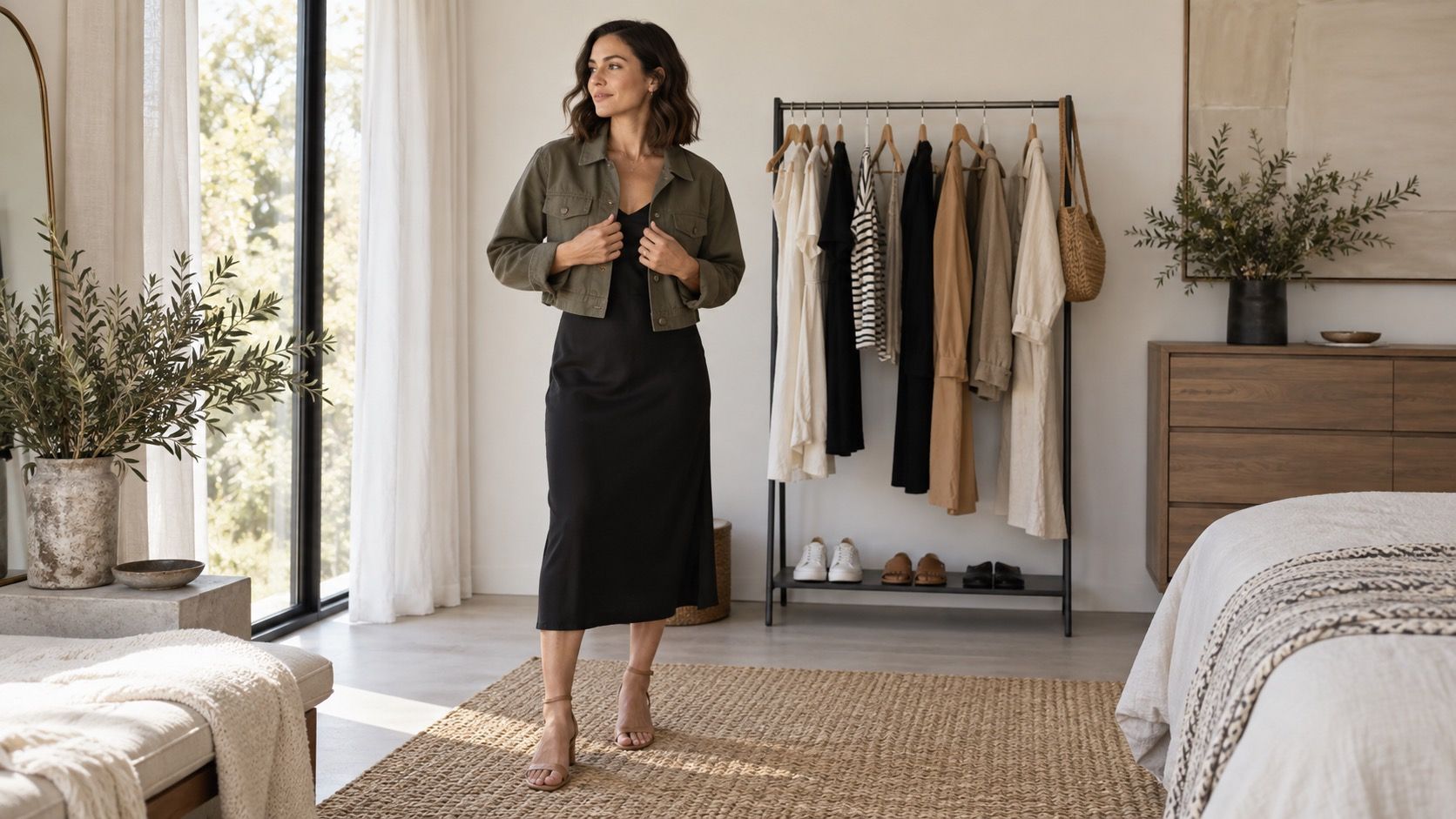
Layering also lets you control width. An open shirt creates two vertical edges and often makes a simple base layer feel more deliberate. A cropped jacket can emphasize the waist area, while a long vest or duster extends the line. If a short layer feels too square, leave it open or choose one with a curved hem. If a long layer feels heavy, show some ankle or use a lighter fabric so the outfit still moves.
Color blocking can do the same work. A darker lower half with a lighter top draws the eye upward; a bright skirt or patterned trouser shifts attention downward. There is no need to turn this into camouflage. It is simply a way to decide which part of an outfit has the most energy. When both the top and bottom are oversized, one quiet color or a visible bit of wrist and ankle keeps the look from becoming shapeless.
Compare dresses, trousers, and skirts by their construction
Many rectangle body shape guides list silhouettes as rules, but construction tells you more. For dresses, look for where the bodice ends, how the skirt leaves the hip, and whether the fabric clings or skims. A fit-and-flare dress can create a distinct waist, but a very stiff skirt may feel costume-like if that is not your style. A straight midi dress with side slits can be just as considered and may be easier to wear with flats or boots.
Trousers give several routes. Wide-leg pairs introduce movement and can balance a close-fitting top. Straight-leg pairs keep a clean line and work with a cropped sweater or tucked shirt. Pleats add room and visual activity at the hip, while flat-front trousers look more streamlined. Check the rise while seated: if the waistband cuts in or leaves a gap at the back, the size number is not the problem; the pattern is.
Skirts are less about creating a particular body shape than about choosing volume. A bias-cut midi follows the body softly. An A-line skirt moves away from it. A short structured skirt adds a crisp horizontal point at the thigh. Pair a fuller skirt with a top that has some definition, not necessarily a tiny waist. A fitted tank, a tucked blouse, or a cardigan worn as a top usually gives enough balance.
Keep a deliberately simple outfit from feeling unfinished
A clean straight silhouette can look polished with fewer pieces, but it benefits from one clear decision. That might be a square neckline, a cuffed sleeve, a pair of substantial earrings, or shoes with a pointed toe. When every item is basic and similarly loose, the outfit can look accidental rather than relaxed. One focal point is usually enough; several competing details can make the same frame feel busy.
Pay attention to cropped lengths. A sweater that finishes around the waistband can make high-rise jeans feel intentional. A jacket that stops at the widest part of the hip may be less comfortable unless it is worn open or has some shape through the back. Hemming a trouser to the shoes you actually wear is another small change with a large effect. Fabric bunching at the ankle interrupts an otherwise clean vertical line.
The most useful wardrobe notes are personal. Record the rise that sits comfortably, the jacket length you reach for, and whether you like a belt visible or hidden under a layer. Over time, a rectangle body shape becomes less of a category to solve and more of a quick vocabulary for shopping. The goal is an outfit that feels chosen when you walk, sit, and go about a normal day.