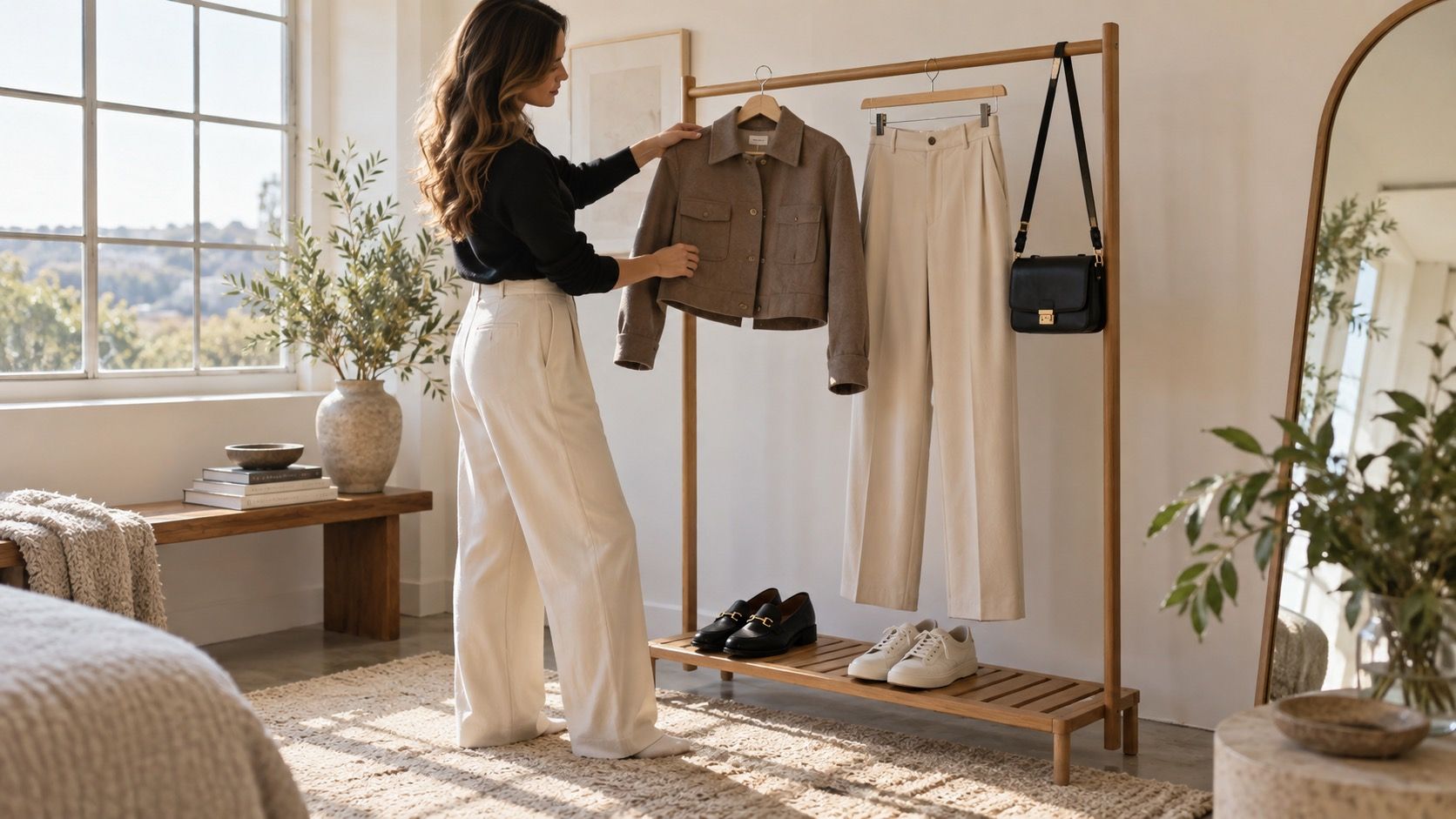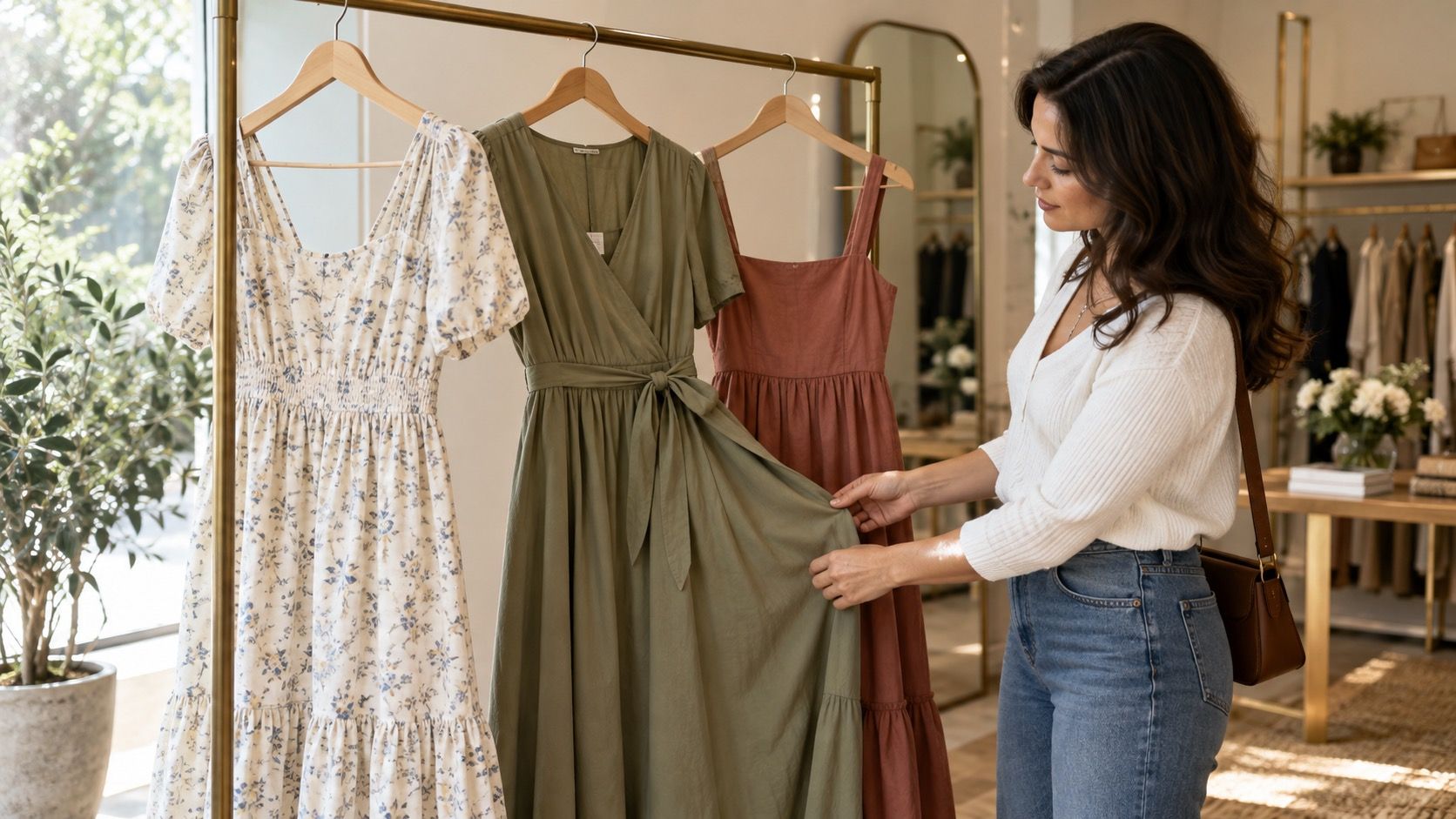
Searching for the best dresses for body shape can make a simple purchase feel like a test with the wrong answers hidden at the back of the store. A dress is more useful than a body-shape formula because it has to work in motion: sitting through dinner, reaching for a bag, walking on uneven pavement, and feeling like yourself in photos. Silhouette matters, but occasion, fabric, and where the garment actually sits on your body matter just as much.
Choose for the occasion and movement first
Before comparing dress styles for body type, decide what the dress needs to do. A work dress may need enough room in the shoulders for a laptop bag and a hem that works when seated. A wedding guest dress may need comfortable lining, secure straps, and shoes that will last through several hours. A casual summer dress may need pockets, breathable fabric, and a neckline that does not shift when you bend.
Movement reveals more than a still mirror. Walk in the dress, sit down, raise both arms, and take a larger step than you think you need to. A fitted pencil shape can be comfortable with a back vent; without one, the same fabric may make walking awkward. A flowing skirt can look effortless until static cling makes it wrap around the legs. A quick test in a changing room is better than discovering these details when you have already left home.
Fabric affects how the silhouette behaves. Crisp cotton holds an A-line shape, while viscose drapes closer to the body. Ponte can offer structure with some stretch; linen needs ease because it has little give and will crease. If a dress needs shapewear, special undergarments, or constant strap adjustment to feel wearable, ask whether you genuinely want that maintenance. A beautiful dress can still be the wrong dress for a full day.
Use waist placement as a proportion tool, not a rule
The waistline is the seam, tie, or visual break that organizes a dress. A natural waist sits near the narrowest part of the torso and can create a familiar balanced shape. An empire waist begins under the bust and gives more room through the stomach and hip. A dropped waist lowers the break and creates a straighter, more relaxed line. None of these placements belongs exclusively to one body shape; their effect depends on torso length, bust placement, and the amount of skirt below.
A wrap dress makes waist placement adjustable, which is why it works for many people. The wrap should cover securely when you sit and should not pull open at the bust. A tie that lands slightly above the natural waist can lengthen the leg line, while a tie placed too high may feel restrictive under the ribs. Make the adjustment, then move around before assuming it is the right position.
Shirt dresses often offer several choices in one garment. Worn loose, they create a clean column; belted, they define the middle; layered open over trousers, they act almost like a long shirt. The practical limitation is button placement. Check that the buttons lie flat at the bust and hip, and that the belt does not pull the placket open. A small snap or a tailor adjustment can help, but a dress that gaps everywhere is likely the wrong cut.
| Dress feature | What it changes | Practical check |
|---|---|---|
| Natural waist seam | Creates a clear middle point | Seam stays comfortable when seated |
| Empire waist | Leaves more ease below the bust | Upper bodice does not compress or shift |
| Adjustable wrap | Lets you set the waist and neckline | Overlap remains secure while walking |
| Dropped waist | Creates a longer, straighter torso line | Skirt begins where you want volume |
Compare silhouettes by construction rather than a promise
An A-line dress is fitted or skims near the upper body, then moves outward through the skirt. It can feel easy around the hip and gives the hem some swing. The useful detail is how quickly the skirt widens. A gentle A-line works for daily wear; a very full version may need a more fitted bodice or a shorter hem to avoid overwhelming the outfit. Pockets and lining can add weight, so test the way the skirt falls rather than judging only the hanger shape.
A sheath dress follows the body more closely and relies on precise bodice fit. Look for darts that point toward the fullest part of the bust and side seams that remain vertical. If the fabric pulls across the hip or the neckline spreads, trying a larger size may help, but it can also loosen the shoulder. A good tailor can refine a sheath, yet it is worth starting with one that fits the shoulders and bust well.
Fit-and-flare dresses combine a shaped top with a fuller skirt, while slip dresses skim with minimal seams and depend on fabric drape. Both can suit a wide range of proportions. A fit-and-flare may feel more structured at an event; a bias-cut slip can move beautifully but requires careful underwear and may cling in humidity. How to choose a dress becomes clearer when you describe these tradeoffs honestly instead of assigning a silhouette a universal benefit.
Check the bodice, skirt, and hem as one system
The bodice is where most dress discomfort begins. Shoulder straps should stay in place without digging, armholes should not gape, and bust darts should point toward rather than above or below the bust. If a zipper ripples or the neckline rolls forward, the issue may be the torso length or bust shaping. Do not dismiss these signs because the skirt looks good; a faulty bodice changes how you carry the entire dress.
Next, look at the skirt volume in relation to the fabric. A gathered skirt in thick fabric can add noticeable bulk at the waist, while the same gathers in a light lawn cotton may float away from the body. A straight skirt needs enough room through the hip and a vent or stretch for stride. With a wrap skirt, check the overlap while sitting. A hem that flies open on a chair is not a minor detail if you plan to wear it in public.
Hem length is practical as well as visual. A mini dress may need shorts underneath for cycling or stairs. A midi hem can land at a different point of the calf depending on height, which changes whether it feels elegant or awkward with your usual shoes. A maxi hem should clear the ground with the shoes you will actually wear. Bring them to the fitting room when possible, or leave enough budget for a careful hem alteration.
Make a near-perfect dress work before replacing it
Many dresses need a small adjustment, not a new identity. Shortening straps, hemming a skirt, adding a snap to a wrap neckline, or taking in a simple waist can turn a nearly right piece into a favorite. These changes are most worthwhile when the fabric feels good, the shoulder and bust fit are already sound, and you can picture wearing the dress in several settings.
Layering can expand the use of a dress without hiding it. A cropped cardigan changes the upper-body proportion and adds warmth. A blazer makes a slip or shirt dress more work-ready. Boots can give a light floral midi some weight in cooler weather, while a flat sandal keeps the same dress casual. When a silhouette feels too sweet or too formal, changing the layer and shoe is often more effective than deciding the dress itself is wrong.
Keep a record of the details that consistently work: the strap length you prefer, the waist placement that feels natural, the hem you wear most, and the fabrics that remain comfortable after several hours. Those notes are more useful than any chart of perfect cuts. A good dress supports the day you have planned and leaves enough room for your own taste to lead.