An outfit can be made from pieces you genuinely like and still feel a little off once you see it in a full-length mirror. That does not mean your body is the problem or that you need a new style identity. Often the issue is proportion: where the eye reads a break between top and bottom, how much visual weight sits at the shoulders or feet, and whether the lengths of layers are competing. Learning to notice those relationships gives you choices. It does not hand you a uniform.
Separate body shape from body proportions before changing your wardrobe
Body shape describes broad contours, while body proportions style looks at relationships: torso to leg length, shoulder width to hip width, head size to accessories, and the placement of a waistline. Two people with the same general shape can find entirely different jacket lengths comfortable because one has a longer torso or a more pronounced waist. This is why a rule that works beautifully in a product photo can be disappointing in your own closet.
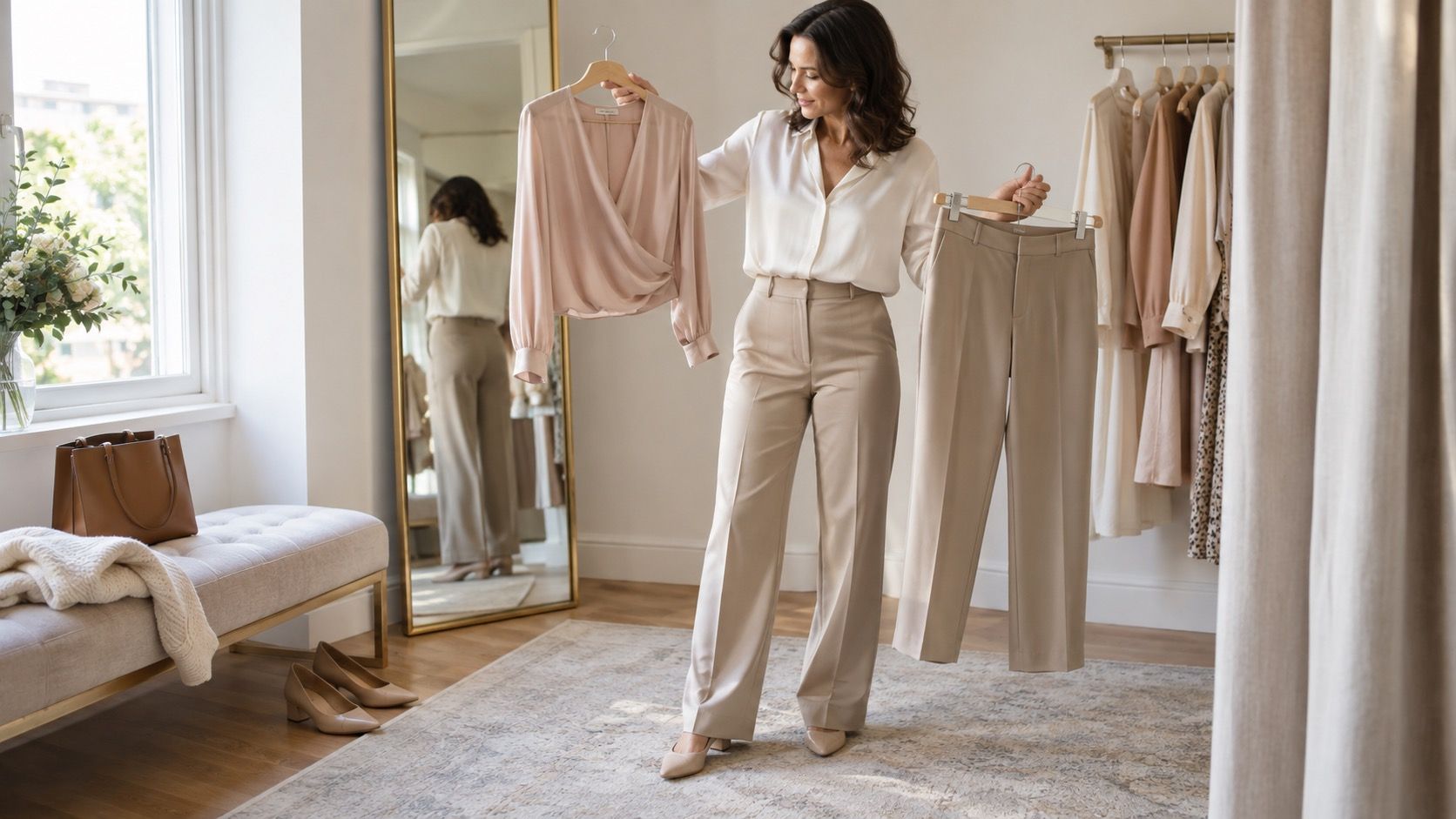
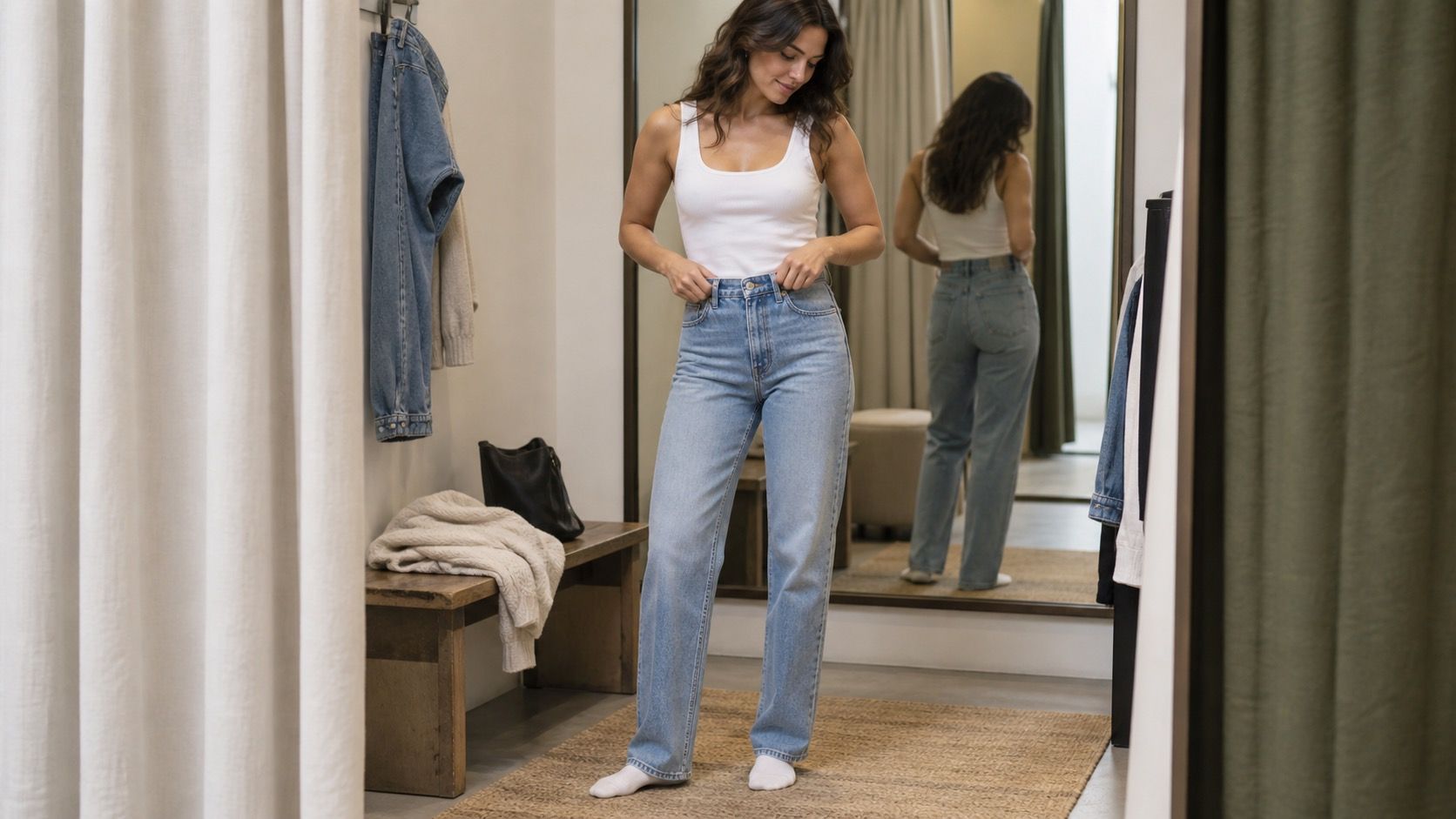
Start with clothes you already wear, preferably a plain top and trousers or jeans. Take a photo from a normal standing distance, then look for the places where the outfit divides your body. Is the strongest line at the natural waist, the high hip, mid-thigh, or ankle? None is automatically better. The useful observation is whether that line feels deliberate. A cropped jacket over high-rise trousers creates a different vertical proportion from a long cardigan over the same trousers, even when every item is the same color.
Find the visual break points in outfits you already own
Visual break points come from hems, waistbands, contrast, belts, open jackets, and even a tucked shirt. A pale sweater with dark trousers creates a clear horizontal division. A monochrome column softens it. If an outfit seems to cut you in half, first test a small adjustment: half-tuck the knit, swap a high-contrast belt for one closer to your trousers, or add a shoe in a similar value to the lower half. These are reversible experiments, which is much cheaper than declaring that a whole category of clothing is wrong for you.
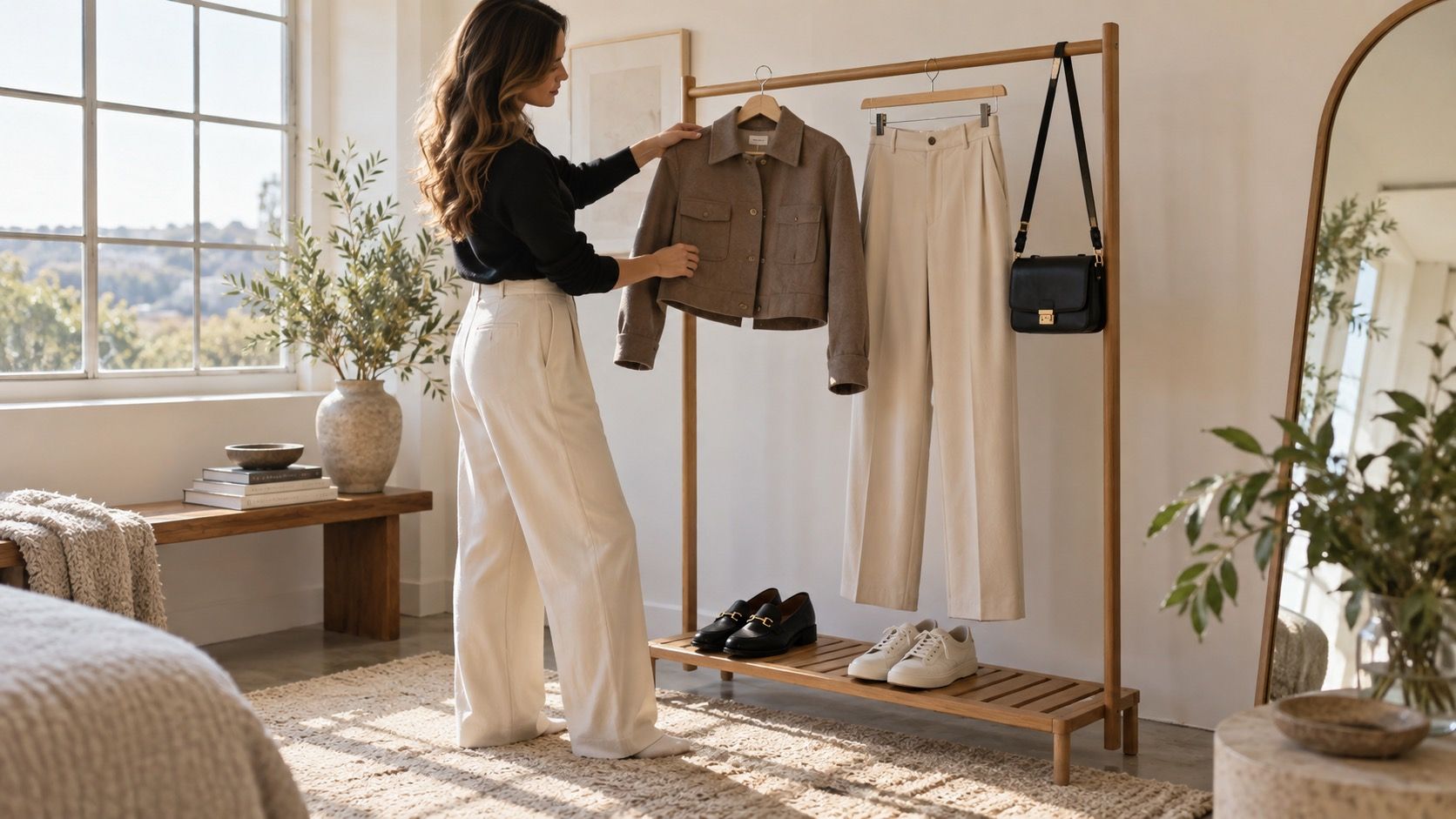
Jacket length is especially revealing. Put on a blazer that ends at the high hip, one that ends at the widest part of the hip, and one that reaches mid-thigh. Each creates a different silhouette, and the middle option is not always the safest. A shorter jacket can clarify a waist; a longer one can make an outfit feel calmer and more linear. Check it while sitting and walking too. The right visual effect is not useful if the hem flips up or catches on a bag strap all day.
Use the rule of thirds as a test, not a law
The thirds rule is a simple styling tool: many people find a one-third to two-thirds division visually satisfying, rather than a strict half-and-half split. For example, a shorter top with longer high-rise trousers may read as one-third above the waist and two-thirds below it. A long shirt over cropped trousers can reverse the emphasis. This can help when you are wondering why one version of an outfit feels more settled, but it is not a measurement exercise. A dramatic half-and-half contrast can be exactly the point of a graphic look.
Try the comparison with one outfit in three versions. First leave the shirt untucked, then front-tuck it, then wear it with a belt or cropped layer. Photograph all three at the same angle. The image makes length contrast easier to see than a mirror does. Pay attention to your preference as much as the supposed ideal. If you love a long, relaxed top, you may keep it and introduce structure through a narrower trouser, a visible neckline, or a more definite shoe rather than forcing a crop.
| If an outfit feels... | Try this first | Check before deciding |
|---|---|---|
| Cut in half | Reduce color contrast at the waist | Whether the change still suits your preferred palette |
| Too blocky | Change one layer length or open the jacket | How the silhouette looks from the side |
| Bottom-heavy | Use a more substantial neckline or shoulder layer | Whether added bulk feels comfortable, not forced |
| Unfinished | Repeat a color or shape in shoes and bag | Whether the accessory scale matches the outfit |
Match scale in shoes, bags, and layers
Scale is about the size and visual presence of elements next to one another. A delicate flat, an oversized tote, a chunky boot, and a wide lapel all make statements beyond their literal size. None of them needs to match your body exactly. The goal is to notice when several strong elements are competing for attention. A large structured bag can anchor a simple coat; paired with a giant scarf, heavy boot, and broad belt, it may make the outfit feel crowded unless that drama is intentional.
Shoe shape changes the end of the vertical line. A pointed toe often extends the line visually, while a rounded sneaker creates a softer stop. The difference is useful when trousers end above the ankle or when a midi skirt exposes a larger section of lower leg. Test the same outfit with two shoes before buying new clothes. It is common to blame a skirt or trouser when the real mismatch is the shoe’s bulk, color, or shaft height.
Balance horizontal proportion without trying to erase your shape
Horizontal proportion concerns width and spread: shoulder seams, sleeve volume, lapels, pleats, pocket placement, and the sweep of a skirt. If a wide-leg trouser feels overwhelming with one sweater, it may be because the sweater is both long and loose, not because wide legs are forbidden. A closer-fitting knit, a shorter hem, or an open neckline may create enough contrast in silhouette. Conversely, a fitted trouser can feel severe beside a sharply tailored jacket until a softer shirt or curved bag changes the tension.
Fabric matters here. Crisp cotton poplin, dense denim, fluid jersey, and brushed wool hold their own shapes differently. Before judging the cut, pinch the fabric and see whether it stands away from the body or falls around it. A jacket with a boxy pattern in a soft fabric can be easy to wear; a supposedly relaxed shirt in stiff fabric can feel larger than expected. Personal style body shape advice becomes more useful once fabric behavior is part of the conversation.
Keep your taste in the picture
Proportion tools can make dressing more legible, but they should not scrub out the details that make you feel like yourself. Someone who loves oversized layers may prefer a little visual volume. Someone drawn to clean tailoring may enjoy a sharp contrast at the waist. The question is not whether an outfit follows a formula; it is whether the formula helps you achieve the effect you wanted. Keep a small album of outfits that felt good in real life, not only in a mirror at home, and note what happened with the lengths, colors, and shoes.
When you want to change something, change one variable at a time. Alter the jacket length, not the jacket, trousers, shoes, and bag all at once. That turns getting dressed into a series of useful observations rather than a verdict on your proportions. Over time you will know which break points, scales, and contrasts give your wardrobe range, while still leaving plenty of room for an outfit that is simply fun.