Apple body shape advice is often packed with anxious instructions about hiding the middle. That is not a very pleasant way to get dressed, and it rarely produces better fit. The useful observation is that an apple-shaped silhouette may carry more fullness through the bust, upper torso, or midsection, often with defined shoulders and legs. Good clothes create ease where you need it, keep the shoulder line tidy, and let you choose whether a waist is visible at all.
Recognise an apple shape through fit, not a checklist
An apple body shape can look different from person to person. Some people notice that dresses fit at the shoulders and legs but pull through the middle; others find that boxy tops become wide everywhere while fitted knits cling in places they would rather leave unconsidered. A less-defined waist is one clue, but it is not the only one and it does not make a body any less balanced or stylish.
Start with clothes you already wear. Where do button-down shirts strain? Does a high waistband feel supportive, or does it fold when you sit? Does a cardigan look better open than closed? These are practical fit signals. They matter more than deciding whether an online diagram looks enough like you. A useful style guide should make shopping calmer, not add another label to live up to.
Create a vertical line without wearing a uniform
A vertical line is simply an uninterrupted path for the eye: an open cardigan over a similar-colour top, a long scarf, a column of one colour, or the two front edges of an unbuttoned jacket. It can make an outfit feel less chopped into sections, especially when the top and trousers meet around the midsection. It is an option, not a requirement. A bold colour-blocked outfit can look excellent too if it feels like you.
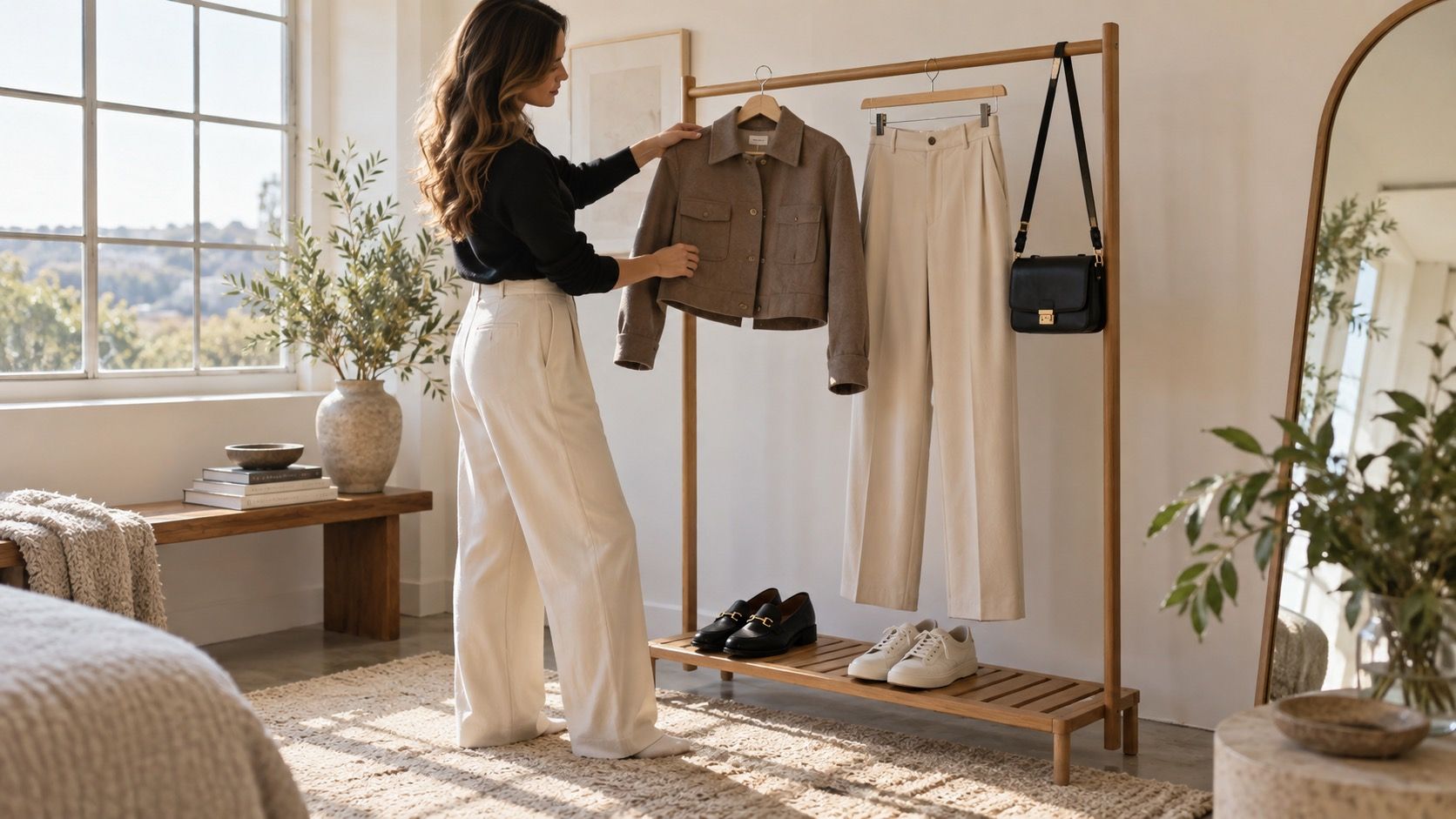
Test this with a familiar base outfit. Put on straight-leg trousers and a simple top, then add an open blazer or a longer cardigan. Look from the front and side, and then sit down. If the layer pulls across the upper arm or bunches at the back, the size or fabric is wrong even if the line is attractive. A soft knit or fluid woven layer usually behaves better than a stiff piece that must stay perfectly buttoned to look good.
| Outfit element | Option to try | What matters in real life |
|---|---|---|
| Neckline | V-neck, open collar, or soft scoop | It should sit flat without pulling at the bust |
| Layer | Open cardigan or single-breasted jacket | Shoulders fit before judging the body width |
| Trousers | Straight-leg or gently wide-leg style | Waistband stays comfortable when seated |
| Dress | Shift, wrap, or softly shaped A-line | Fabric should skim rather than cling or tent |
Choose tops and layers with room in the right place
For apple body type outfits, start at the shoulder seam. It should land close to the shoulder point; if it drops far down the arm, a larger size may be adding width without adding useful comfort. Once the shoulder fits, look for a body shape that skims rather than clings. Side slits, a gently curved hem, a soft front tuck, or a top that falls away from the body can all provide room without looking oversized.
Open necklines are popular because they give the upper body some visual breathing space, but there is no need to force a deep V-neck if you dislike it. A crew neck with a pendant, a square neckline, or a shirt collar left open can create a similar effect. Layers should be judged with your arms moving. Reach for a shelf and cross your arms; if the sleeves bind or the back rides up, the garment will annoy you long before its silhouette has a chance to matter.
Let trousers, skirts, and dresses work with your day
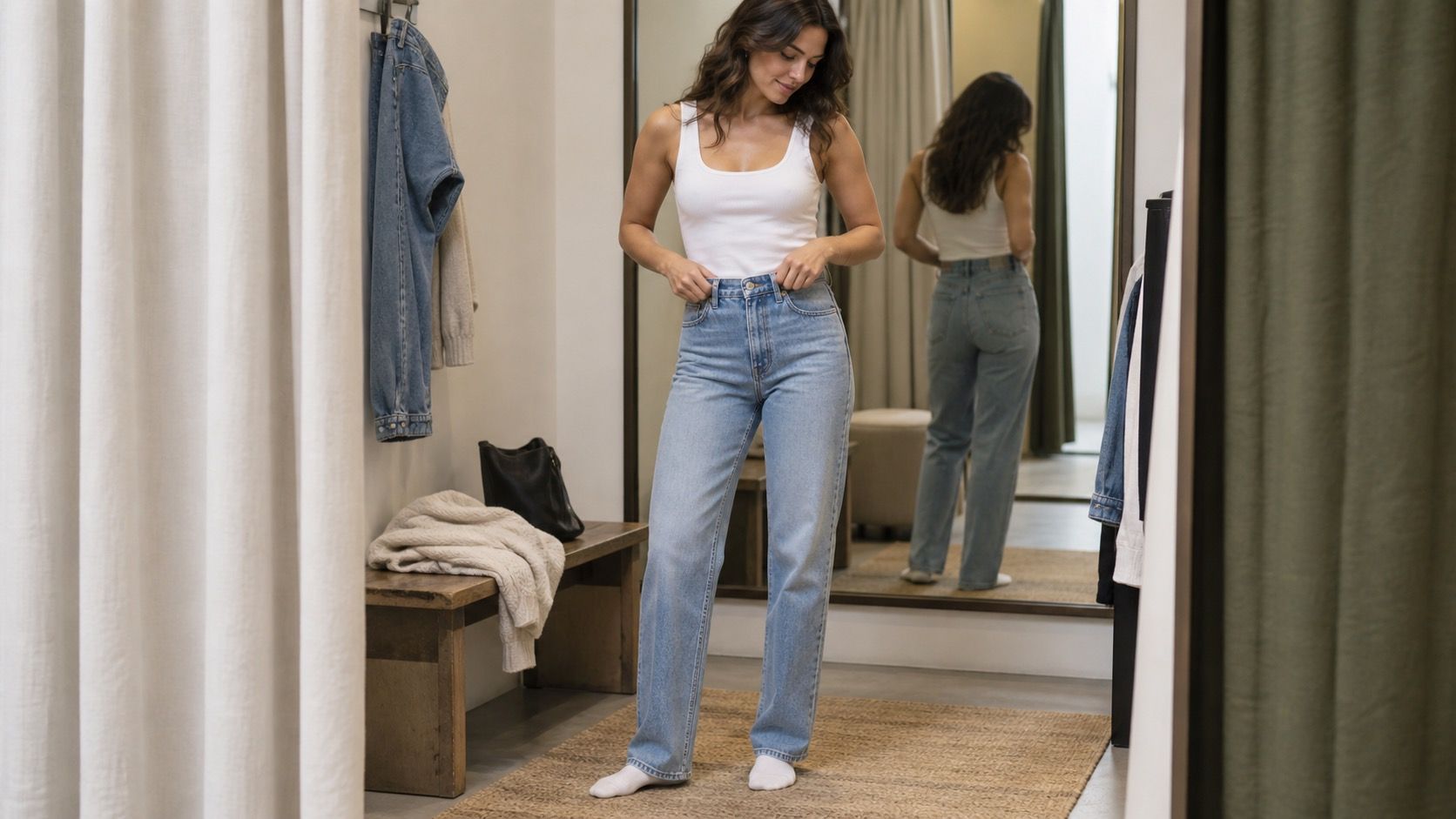
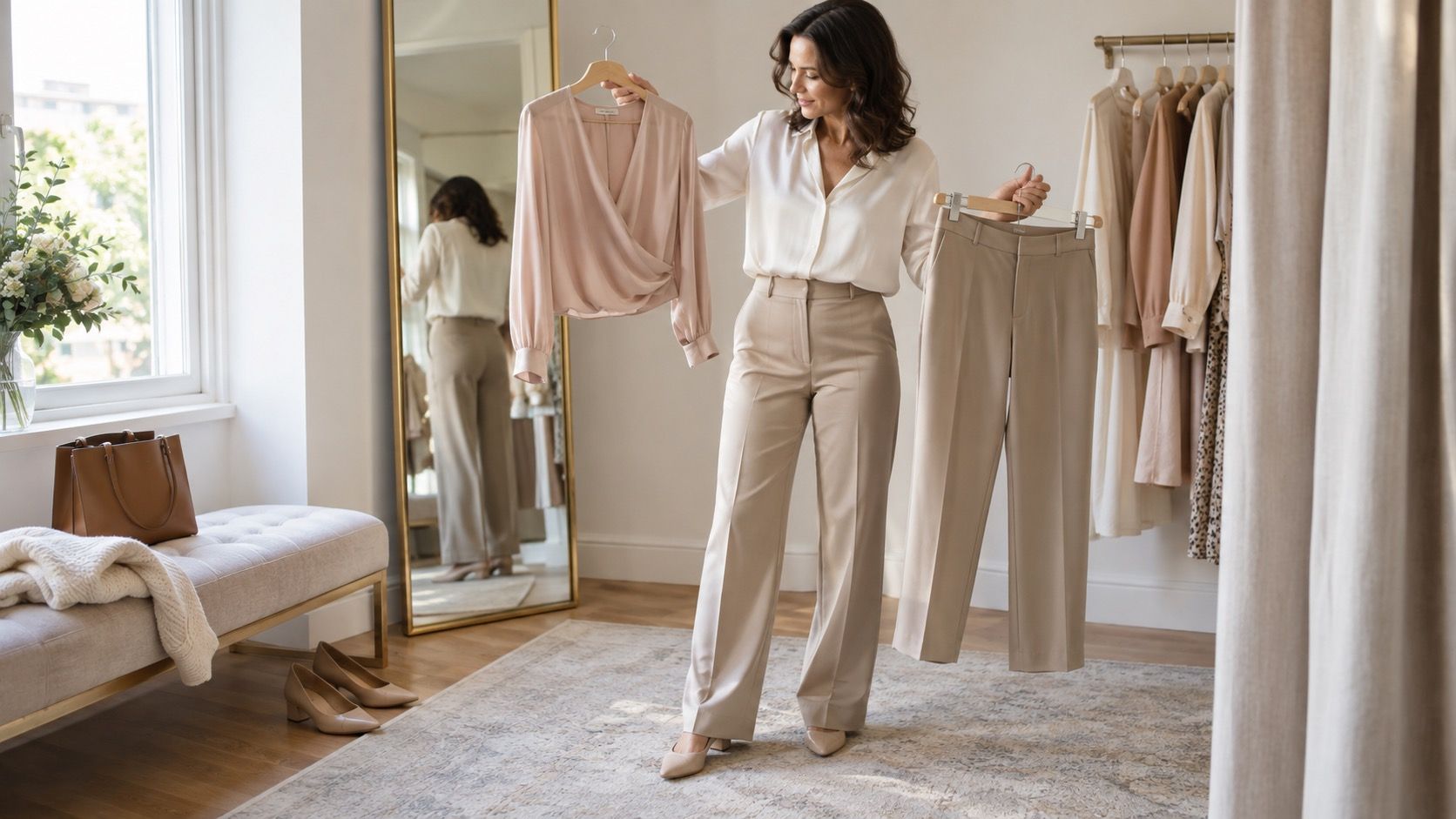
Straight-leg trousers are a reliable place to begin because they create an even line below the hip without being as wide as a dramatic palazzo leg. A mid-rise or comfortable high rise may be more pleasant than a very low rise that cuts across the abdomen, but there is no universal best choice. Walk, sit, and bend in the fitting room. The waistband should not roll, dig in, or leave you counting the minutes until you can change.
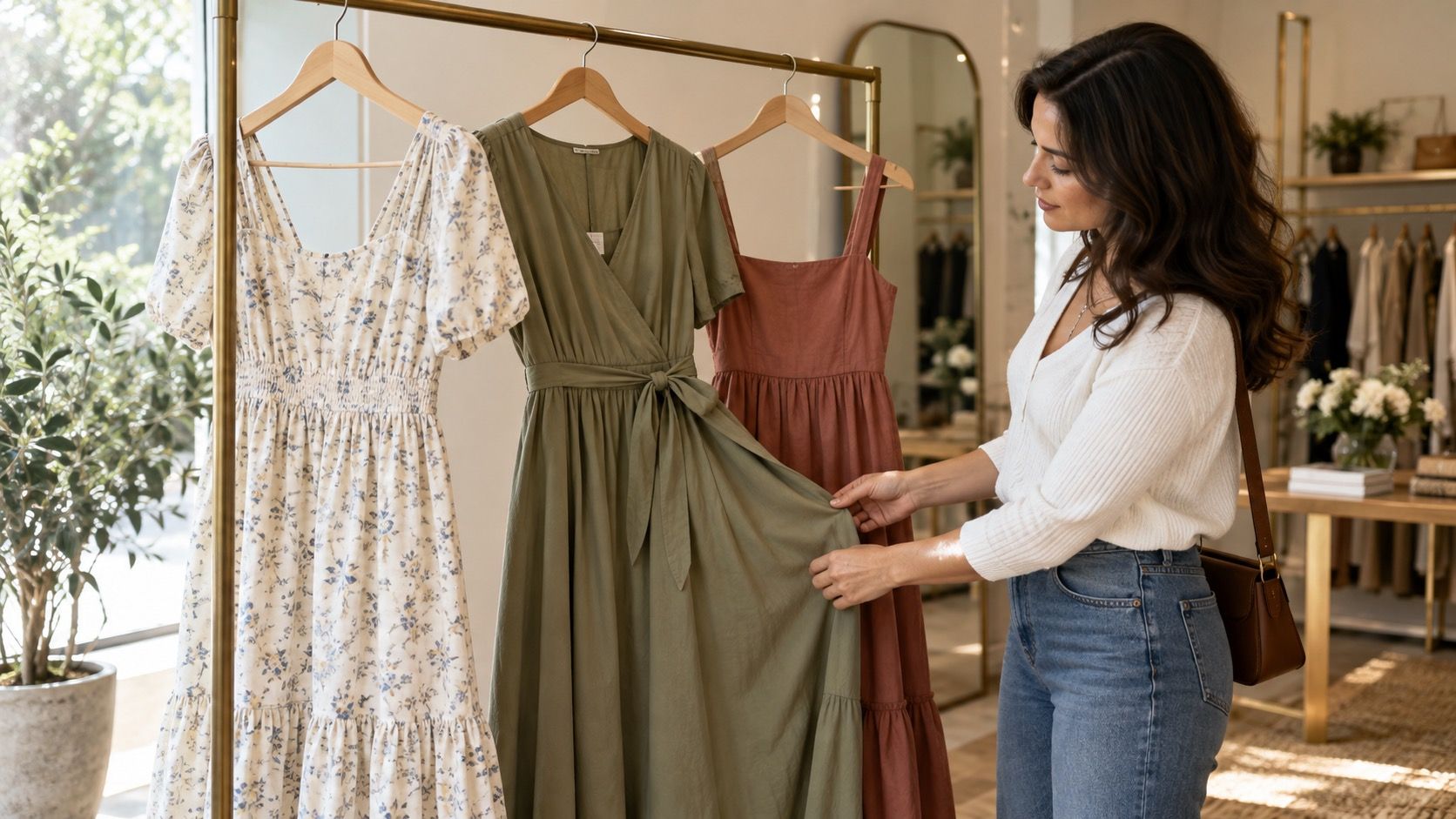
For skirts, an A-line with a clean waistband, a bias cut, or a softly pleated midi can offer movement without clinging. Dresses may be shift-shaped, wrap-style, empire-waisted, or gently belted depending on what you enjoy. Check the seam placement: an empire seam should sit comfortably below the bust rather than compress it, and a wrap should stay closed while seated. A dress that skims the midsection is not an attempt to conceal it; it is simply a different relationship between fabric and body.
Pay attention to hem placement and fabric weight
Hems create horizontal lines, so their position can change an outfit more than a new colour ever will. A top that stops at the fullest point of the hip or tummy may feel awkward, while one that ends above that point, has a curved hem, or extends clearly below it may feel more deliberate. Try the same top half-tucked, untucked, and with a small front tuck before writing it off. A mirror from a few steps away is more informative than a close-up.
Fabric weight is just as important. Very thin jersey can cling and reveal every crease, while an excessively stiff fabric can stand away from the body like a tent. Medium-weight knits, viscose blends, crepe, soft denim, and structured cotton often give a comfortable middle ground. Look at the garment after sitting for ten minutes; if it twists, pulls, or wrinkles in a way that bothers you, the issue is construction, not your shape.
Use fit checks instead of restrictive style rules
When you are deciding how to dress apple shape, run a small set of checks: does the shoulder seam fit, can you sit comfortably, does the hem stay where you expect, and do you like the view from the side? These questions catch more problems than rules about never wearing belts, never tucking in, or always choosing dark colours. A belt may work beautifully over a dress you love; it just needs to sit where it is comfortable rather than obeying a chart.
Keep a record of what feels good after a full day. Perhaps open layers are useful for work, trousers with a flat front are easier for travel, and a particular neckline makes you feel awake without feeling exposed. Those notes will guide your wardrobe far better than a generic apple body shape prescription. Style becomes lighter once clothing is allowed to fit your life instead of trying to correct your body.