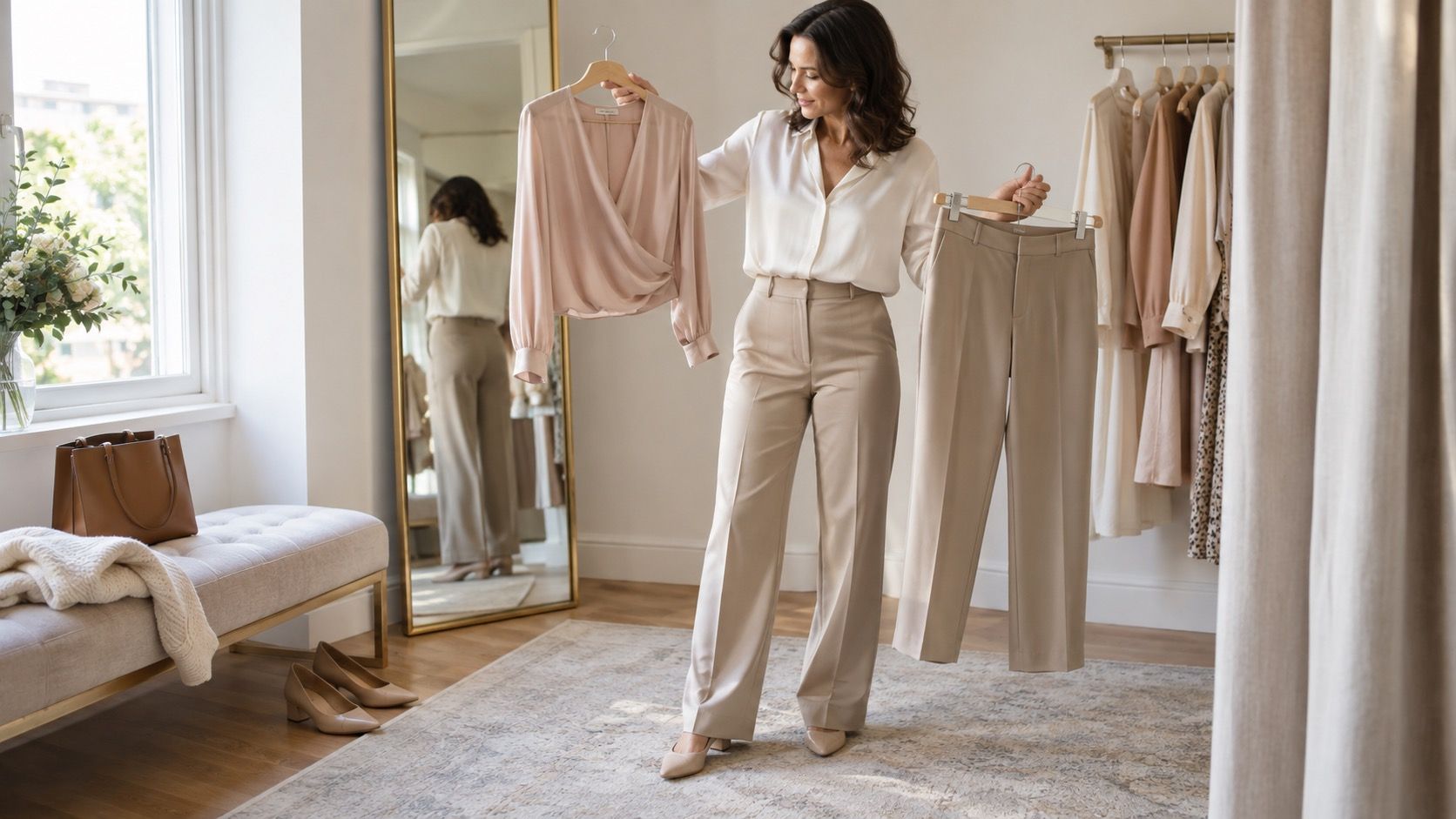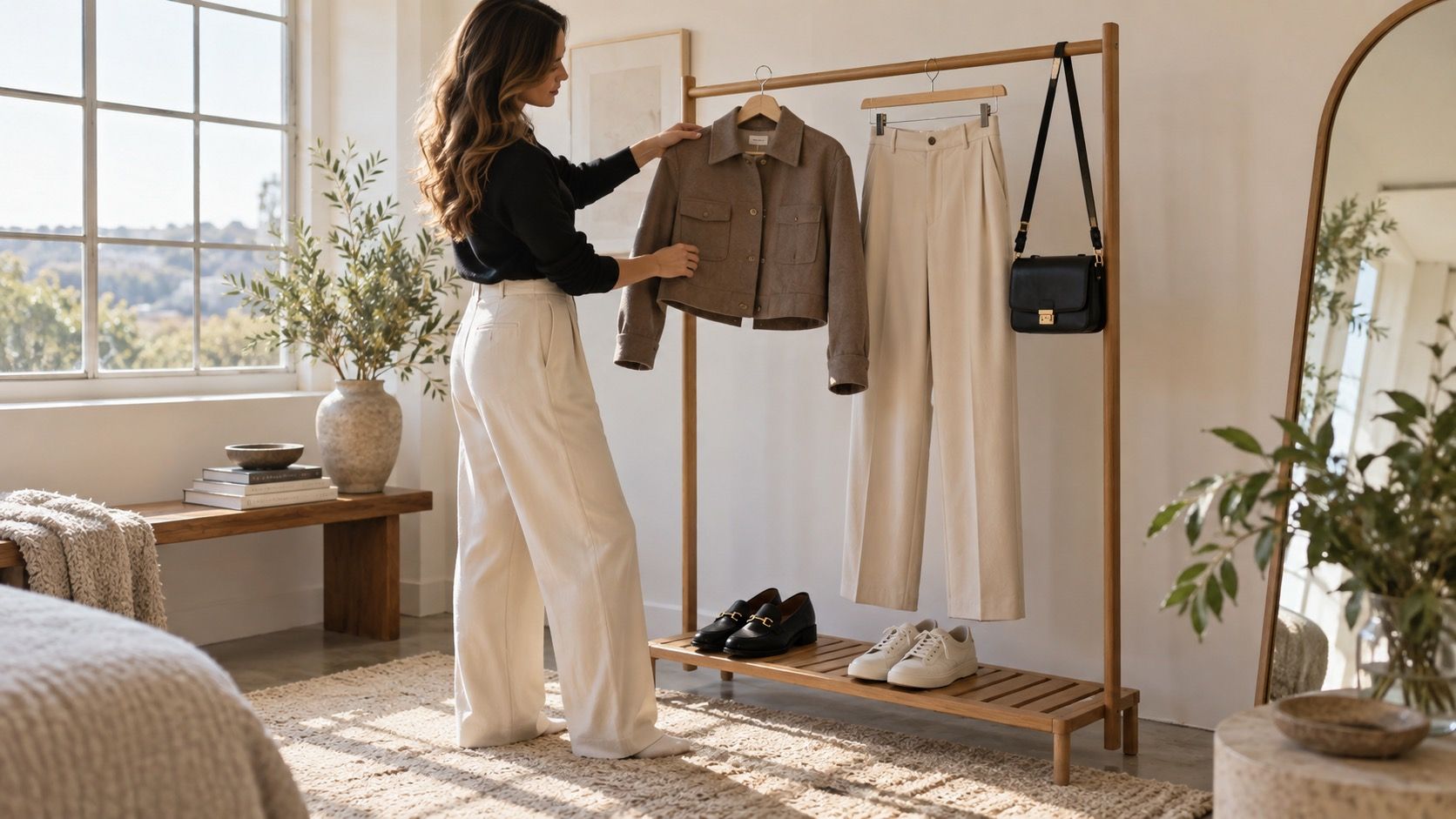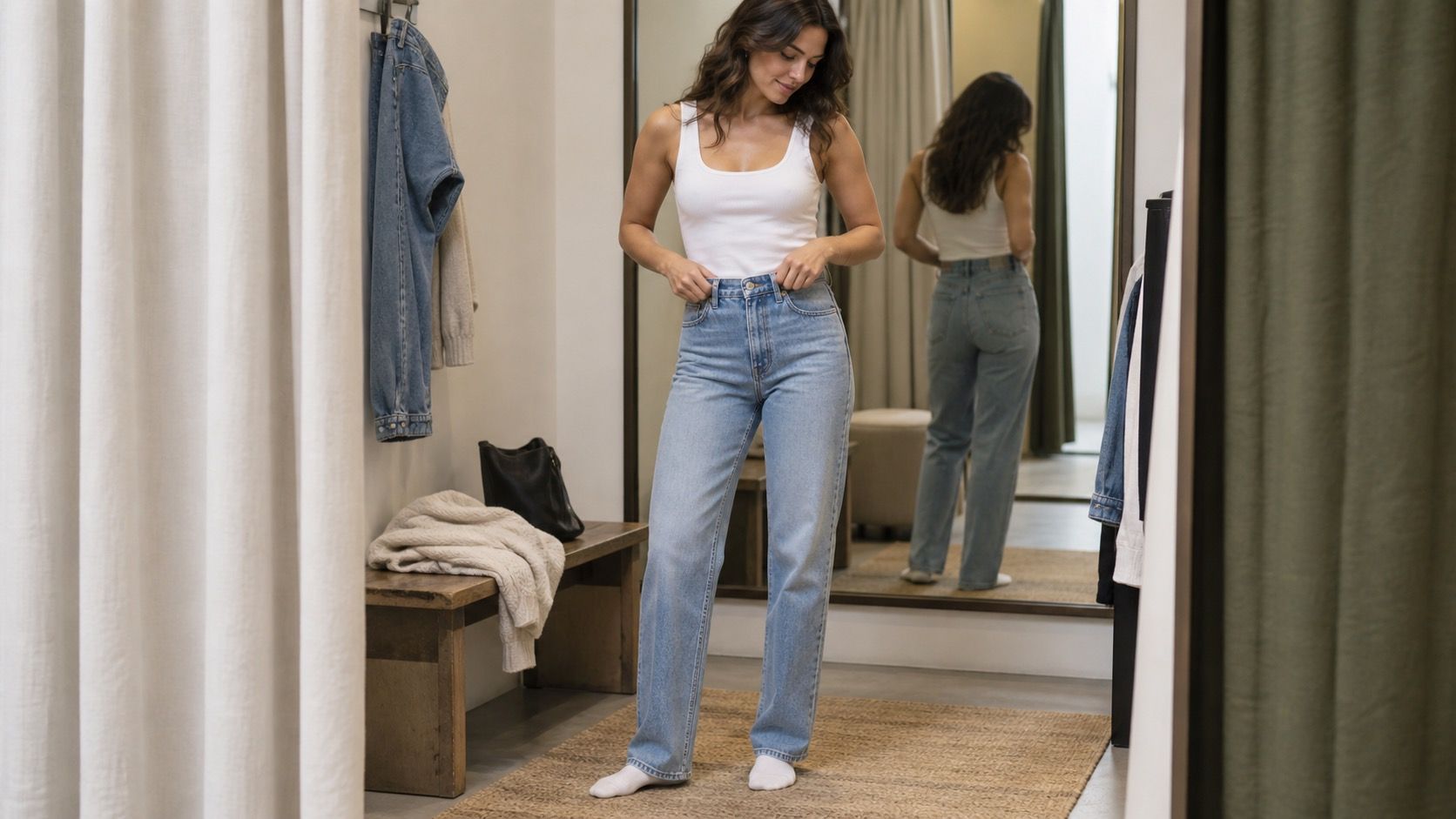
The best jeans for body shape are usually the pair that stays comfortable after lunch, does not need constant pulling, and works with the shoes already in your closet. Trend labels such as slim, relaxed, or vintage tell only part of the story. Rise, hip curve, thigh room, inseam, pocket placement, and denim recovery decide whether a pair becomes a reliable uniform or a purchase that remains folded with the tags removed.
Start with rise rather than the trend name
Rise is the distance from the crotch seam to the top of the waistband, and it determines where jeans anchor on the torso. A high rise often sits at or near the natural waist and can feel secure with tucked tops. A mid rise usually lands lower and may be more comfortable for a short torso or when you spend much of the day seated. A low rise exposes more hip and works best when its waistband stays in place during movement.
There is no universally ideal rise for a body type. The useful test is physical: sit, bend, take a few stairs, and check whether the front crotch pulls or the back waistband leaves a gap. If the jeans slide down when you walk, a belt may not be the answer. The rise may be too short in back, too long in front, or cut for a different hip-to-waist relationship.
Try on jeans with the kind of top you intend to wear. A high rise can look very different with a cropped knit, a tucked shirt, and an untucked tee. The goal is not to make your torso appear a prescribed length. It is to find the rise that lets you move without thinking about the waistband every ten minutes.
Compare straight, wide, and bootcut legs in motion
Straight-leg jeans are a dependable middle ground. They follow the thigh with a relatively even width to the hem, so they can work with sneakers, loafers, and ankle boots. Check that the knee is not pulling and that the hem does not stack excessively. A straight leg that is too narrow through the thigh behaves like a skinny jean, while one that is too wide can lose the clean line that makes the shape useful.
Wide-leg jeans add volume below the hip and can feel balanced with close-fitting knits, cropped jackets, or an oversized shirt worn open. Their success depends heavily on length. A hem that puddles on the floor looks untidy and wears out quickly; one that stops too high can make the wide shape feel abrupt. Bring the shoes you plan to wear most often, especially if the jeans are full-length.
Bootcut jeans widen gradually from the knee and give a gentle flare without the drama of a full wide leg. They can be a practical answer when you wear boots regularly because the hem has room to fall over the shaft. The knee break should start at your actual knee. If it begins too high, the leg shape can look oddly flared; too low, and it loses the point of the cut.
| Leg shape | Best everyday strength | Fit check |
|---|---|---|
| Straight leg | Easy with many shoe types | Thigh and knee have room to bend |
| Wide leg | Movement and a grounded silhouette | Hem clears the floor in usual shoes |
| Bootcut | Works naturally over boots | Flare starts at the knee, not mid-thigh |
| Tapered leg | Roomy upper leg with a neat ankle | Calf does not catch when sitting |
Check the waist and hip fit before worrying about size
Jeans for body type are often reduced to waist size, but the back view tells a fuller story. A waist gap can happen when the waistband is straight and your body has more curve from waist to hip. It can also appear when the jeans are too large everywhere. Pinch the extra fabric at the back and look at the hip and thigh: if those areas are smooth and comfortable, a curved waistband or a small alteration may solve it. If everything is loose, try a smaller size.
At the hip and seat, denim should skim rather than cling. Horizontal whiskers at the zipper, pockets pulling open, or a seam digging into the seat suggest that the pair is too tight or lacks the needed stretch. Excess fabric under the seat can mean the rise is too long or the cut is too roomy there. Walk around the fitting room rather than standing squarely in front of the mirror; the fabric gives better information when it is used.
Do not assume that a little discomfort will disappear after breaking in. Rigid denim may soften, but it will not gain several centimeters at the hip. Stretch denim may relax, but a waistband that hurts on the first try-on rarely becomes pleasant. If you are between sizes, compare the construction and fiber content before deciding. A rigid pair may need the roomier size; a stretchy pair may need the smaller one if it has good recovery.
Use pockets and wash as finishing details
Pocket placement changes the back view more than most people expect. Pockets set high can make the seat look lifted; very low pockets can lengthen the visual area below the waist. Large pockets add coverage, while small pockets expose more of the denim underneath. The useful choice is the one that sits comfortably on your own body and does not pull open when you move. A pocket seam that cuts in can be a sign that the jeans are too tight through the hip.
Wash and fading create their own lines. A dark, even wash reads quieter and often works as a trouser substitute. Strong whiskering across the front draws attention to the hip and upper thigh; vertical fading can lengthen the leg visually. None of these effects are mandatory, but they can explain why two otherwise similar pairs feel different when you put them on.
Details at the hem deserve the same scrutiny. A raw hem may shrink or fray, while a split hem changes how the jeans sit over shoes. Cuffs add a clear horizontal break and shorten the visible leg slightly. If you expect to hem a pair, ask whether the original hem can be preserved and decide which shoes deserve the correct length first.
Use a fitting-room checklist that reflects your real day
Put your phone in the front pocket, sit on a bench, squat halfway, and walk at a normal pace. These small tests show whether pockets are usable, whether the rise is comfortable, and whether the thigh fabric drifts. Look at the jeans with the top you normally wear, then with a different silhouette. A pair that works only with one tucked sweater may be less versatile than it first appears.
Take a front, side, and back photo if the store allows it. In particular, check the back waistband after sitting and the inseam with shoes on. If the jeans need a belt, ask whether you want one as part of the styling or need one to keep the garment up. The first is a preference; the second is a fit warning.
A good pair does not have to match every recommendation for every body shape. It should suit your tolerance for structure, the activities in your week, and the tops you actually own. When rise, thigh room, and length are right, the rest of the choice becomes pleasantly specific: the leg shape, wash, and pockets that make you want to reach for them again.