Pear body shape advice sometimes sounds like a campaign to disguise hips, which is neither necessary nor very useful. A pear-shaped silhouette generally carries more visual width through the hip and thigh than the shoulder or bust area. The practical question is how a garment fits those areas, and whether you want an outfit to echo that proportion, balance it, or simply leave you alone to get on with your day.
See the silhouette without making it a problem to solve
On a pear body shape, shoulders may look narrower than hips, the waist may be distinct, and trousers can demand a different size from tops. None of this means the lower body is out of proportion. It means garment construction matters. A stiff straight skirt that fits at the hip may stand away at the waist; a shirt that fits the shoulders may feel easy while the same size of jeans is restrictive at the thigh.
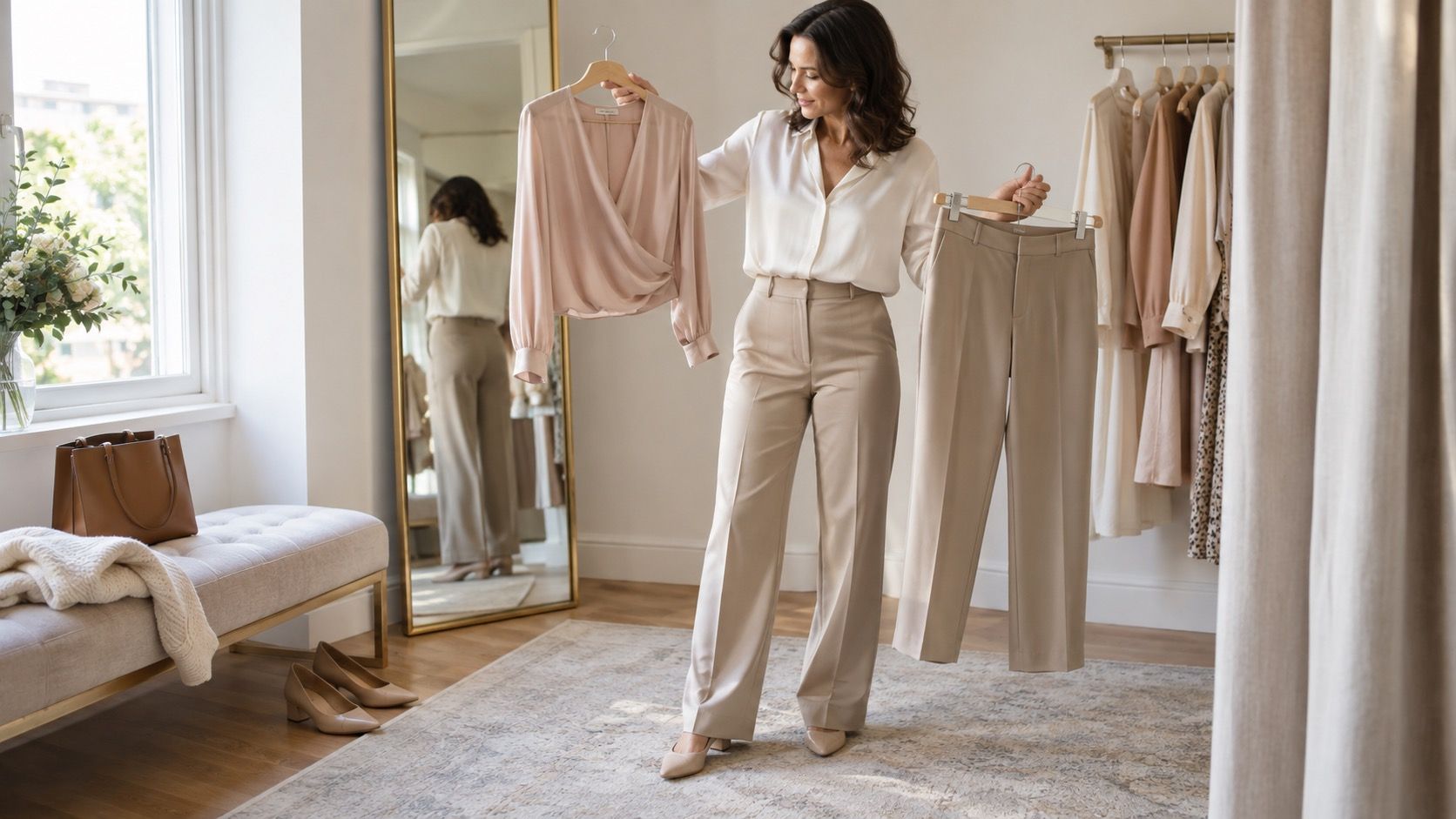
Start by noticing where clothes pull or hang, not by judging a mirror image. Take a favourite pair of trousers and a favourite top. Why do they work? It may be the rise, a curved waistband, a neckline that opens the upper body, or simply a fabric with enough weight to fall cleanly. Those specific clues are more helpful than any long list of things a pear shape is supposedly forbidden to wear.
Use necklines and shoulder detail when you want more balance
For pear shape outfits that feel visually balanced, the upper body is the easiest place to experiment. A boat neck, square neck, open collar, or softly puffed sleeve can broaden the shoulder line a little. A brighter colour, a print, or an interesting earring can do the same job without adding physical volume. The useful check is to view the whole outfit from several steps back, not from six inches from the mirror.
There is a caveat: detail must still fit. A shoulder seam that falls down the arm looks sloppy, while a very rigid puff sleeve can feel costume-like if it is not your taste. Try a simple knit with a wider neckline against a plain crew neck in the same trousers. If one makes the outfit feel more settled, keep that information. If it does not, you have learned that balance is not the goal on that day.
| Garment area | Useful option to test | Practical fitting check |
|---|---|---|
| Top | Open collar or square neckline | Shoulder seam should end near the shoulder point |
| Trousers | Wide-leg or straight leg with a curved waistband | Sit down; the waist should not gape or cut in |
| Skirt | A-line, bias, or softly pleated style | Walk and check that the fabric does not pull across hips |
| Jacket | Cropped or waist-length layer | Hem should not catch at the widest hip unless intended |
Choose trousers and skirts for the hip fit first
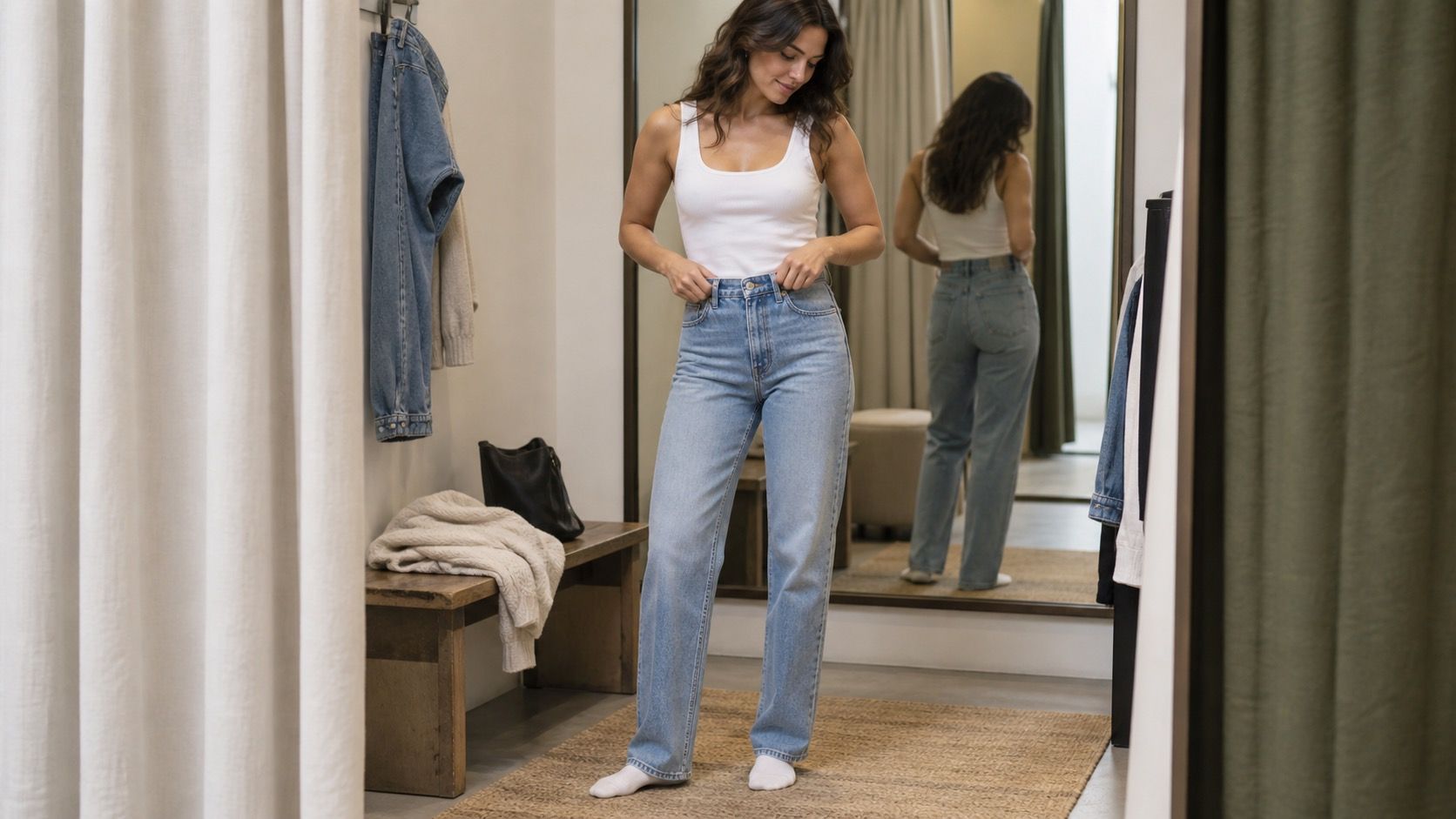
When learning how to dress pear shape, fit trousers at the fullest hip and thigh before deciding whether the waist needs alteration. Sizing down to eliminate a waistband gap often creates horizontal strain lines or makes pockets pull open. A curved waistband, a little elastane, or a brand that offers hip-friendly cuts can reduce the compromise. A tailor can take in a waist far more easily than they can create room in a tight seat.
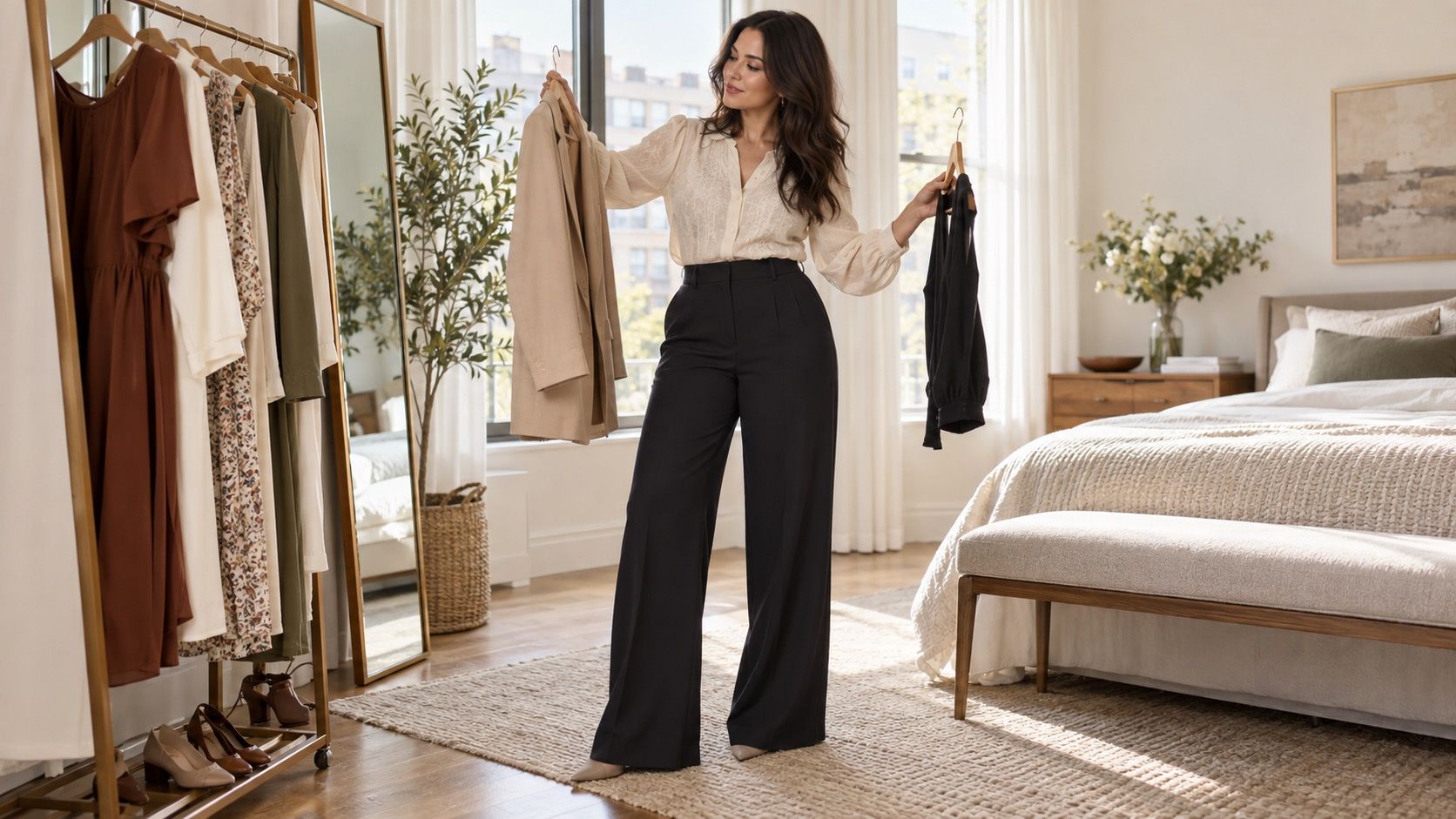
Wide-leg trousers are not compulsory, but they are worth trying because the line can fall from the hip without gripping it. Straight legs, bootcuts, and relaxed tapered trousers may work just as well. For skirts, compare an A-line that skims the hip with a pencil skirt that has a back slit and enough stretch. Fabric weight matters: thin jersey may cling, while a medium-weight woven fabric can move without advertising every seam underneath.
Pick dresses and outerwear that allow real movement
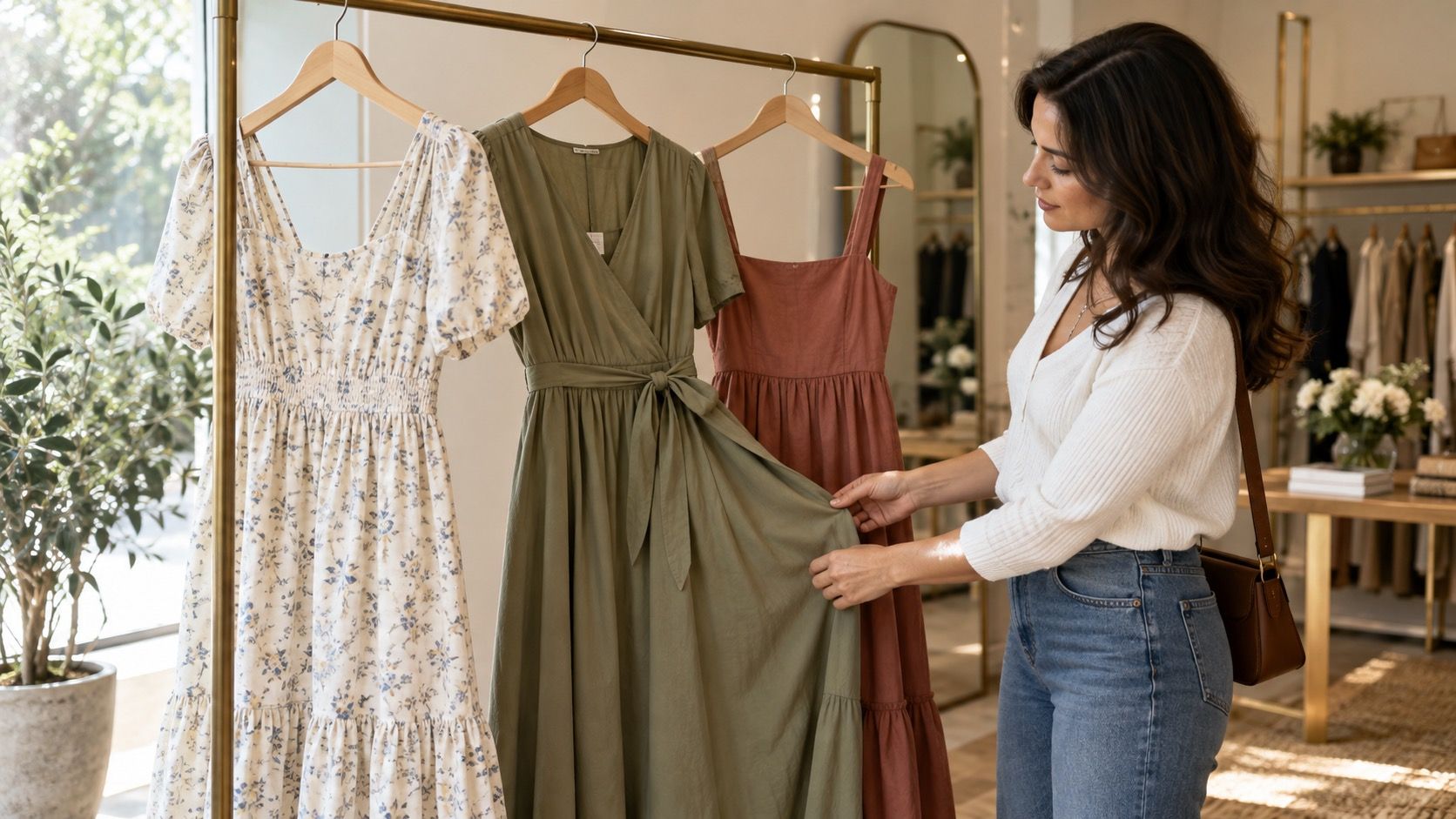
Dresses are easier when the pattern has room through the hip before it is belted at the waist. Fit-and-flare shapes, wrap dresses, shirt dresses with a soft tie, and bias cuts all offer different versions of that idea. Check the waist placement carefully. A seam that lands too high can make the skirt pull upward, while one too low may remove the shape you liked in the first place. Sit and take a full stride before removing the tag.
Outerwear benefits from the same attention. A cropped denim jacket can end at the waist and make a dress feel intentional; a longer coat may look better left open if it strains across the hip when closed. If you want to belt a coat, use the tie it came with before adding a hard leather belt. The softer line often accommodates layers and keeps the coat comfortable on a cold walk.
Diagnose a bottom-heavy feeling with one change at a time
When an outfit feels bottom-heavy, resist changing everything. First try a different neckline or tuck; then try a shorter jacket; then compare the trouser leg shape. A long, thin top ending exactly at the widest part of the hip often creates a horizontal stop, while a top that ends above it or below it may feel easier. This is a proportion experiment, not a commandment about covering or revealing.
Also check fit in motion. A top can look balanced in a mirror but ride up as you walk; a skirt can look calm until you climb stairs. Keep notes after wearing outfits outside: did the waistband stay put, did you tug at the hem, did you like the shoulder line in photos? The answer will refine your pear body shape style more honestly than a list of universal rules.
Make room for personal taste
You can wear fitted skirts, skinny jeans, oversized sweaters, or a plain black T-shirt with a pear-shaped silhouette. The only question is whether you like the resulting look and whether the garment is comfortable. Some days you may want a strong shoulder line and a wide trouser; another day, you may want a body-skimming dress that follows every curve. Both choices can be deliberate.
The most durable wardrobe usually comes from repeating what works mechanically: waistbands that do not roll, shirts that fit the shoulder, hems that do not catch, fabrics that survive sitting. Once those basics are reliable, the visual balance becomes a creative choice rather than a correction. That is a much more useful way to dress a pear body shape.