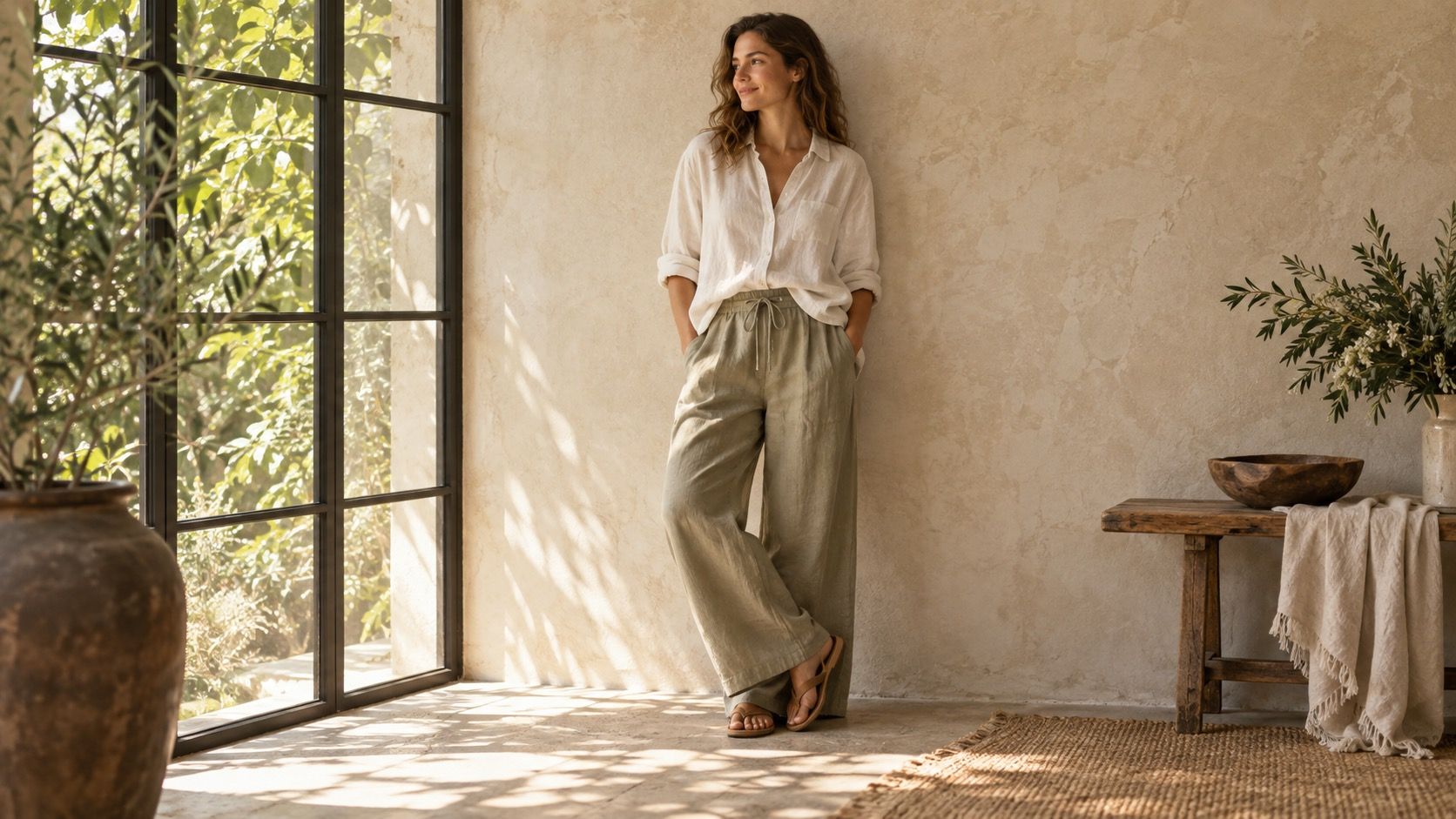
Soft Natural style is often reduced to a short shopping list: loose linen, wavy hair, a bit of boho detail. That shorthand misses the useful part. Within Kibbe discussions, Soft Natural is a way of exploring a relaxed silhouette with softness and gentle shaping, rather than stiff structure or tiny, fussy detail. The goal is not to make every outfit look casual or earthy. It is to notice when ease, texture, and an open line make clothes feel more connected to the person wearing them.
What people mean when they say Soft Natural
Soft Natural belongs to the wider Natural family in the Kibbe framework. The idea usually combines a sense of width or openness with a softer, rounded element. In clothing, that may show up as an unconstructed blazer rather than a sharply padded one, a neckline with room around the collarbone, or a fabric that moves instead of standing rigidly away from the body. It is about the overall impression, not a requirement to have any single physical feature.
That distinction keeps the category from becoming a costume. A relaxed fit does not mean oversized in every direction, and softness does not mean frills on every seam. Too much volume can hide the person inside the clothes; too much ornament can feel busy. Think of a softly shaped jacket that still has a shoulder seam in the right place, or a knit dress that follows the body without squeezing it. Ease works best when there is enough intention to keep the silhouette from becoming accidental.
Start with line and fabric before buying Soft Natural pieces
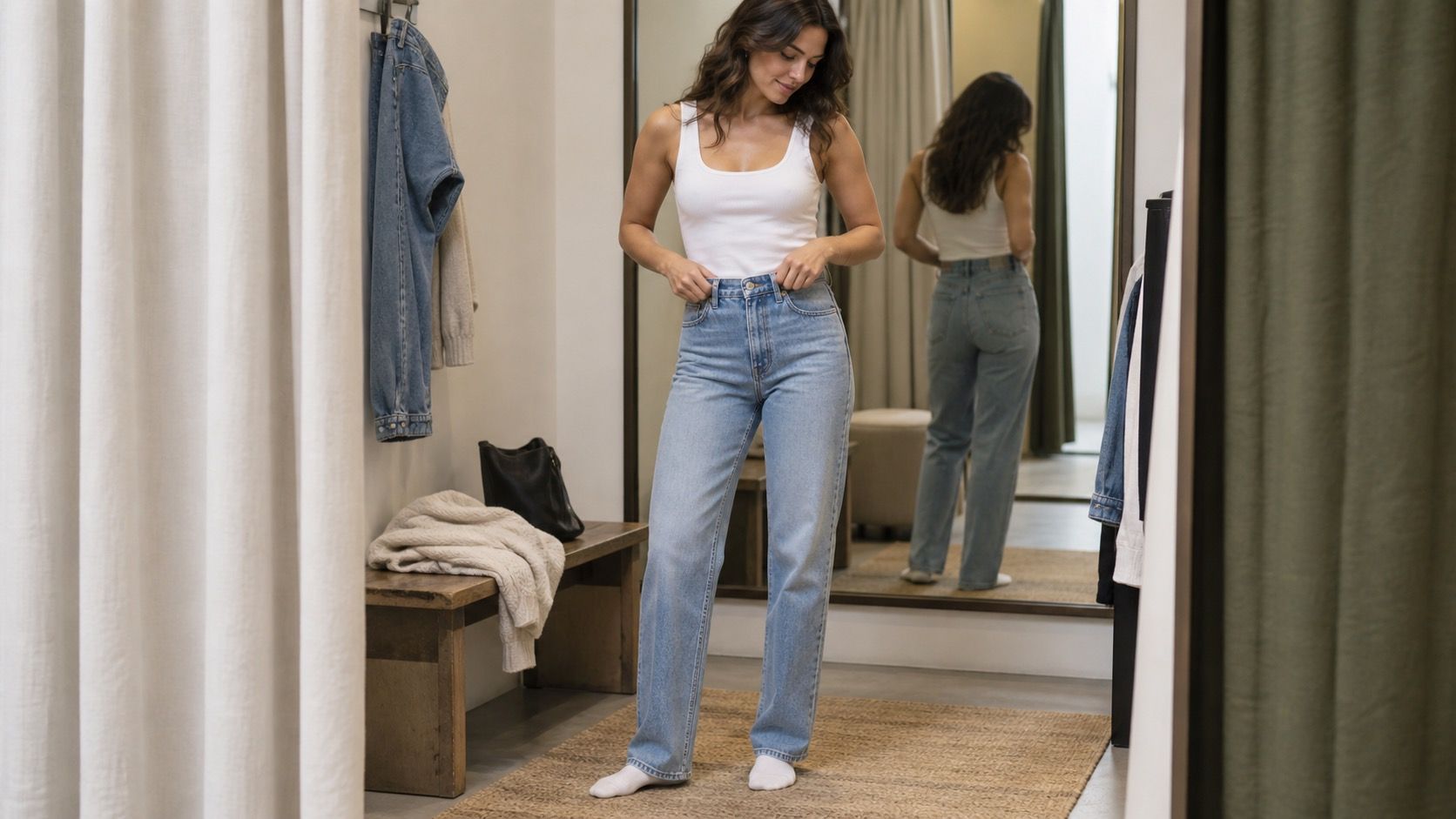
Fabric tells you a lot before a label does. Look for materials with visible texture or a flexible hand: washed linen, soft denim, textured cotton, knitwear with some body, suede, supple leather, or a fluid blend that is not overly shiny. The exact fiber is less important than behavior. Hold the garment by the shoulder and see whether it falls in a gentle line or forms a hard box. A fabric can be casual without being limp, and a tailored piece can be relaxed if the material has movement.
Fit is the other half. A shirt with a slightly open neckline and sleeves you can push up often feels more adaptable than a very tight button-up. A jacket with a little room through the upper back can look polished while still letting you drive or reach for groceries. Check the shoulder seam, however: a seam drifting halfway down the arm is not automatically relaxed chic. It may simply be the wrong size. Soft Natural outfits work best when the garment has ease where you move and enough shape where you need orientation.
Build tops, dresses, and trousers around a soft waist
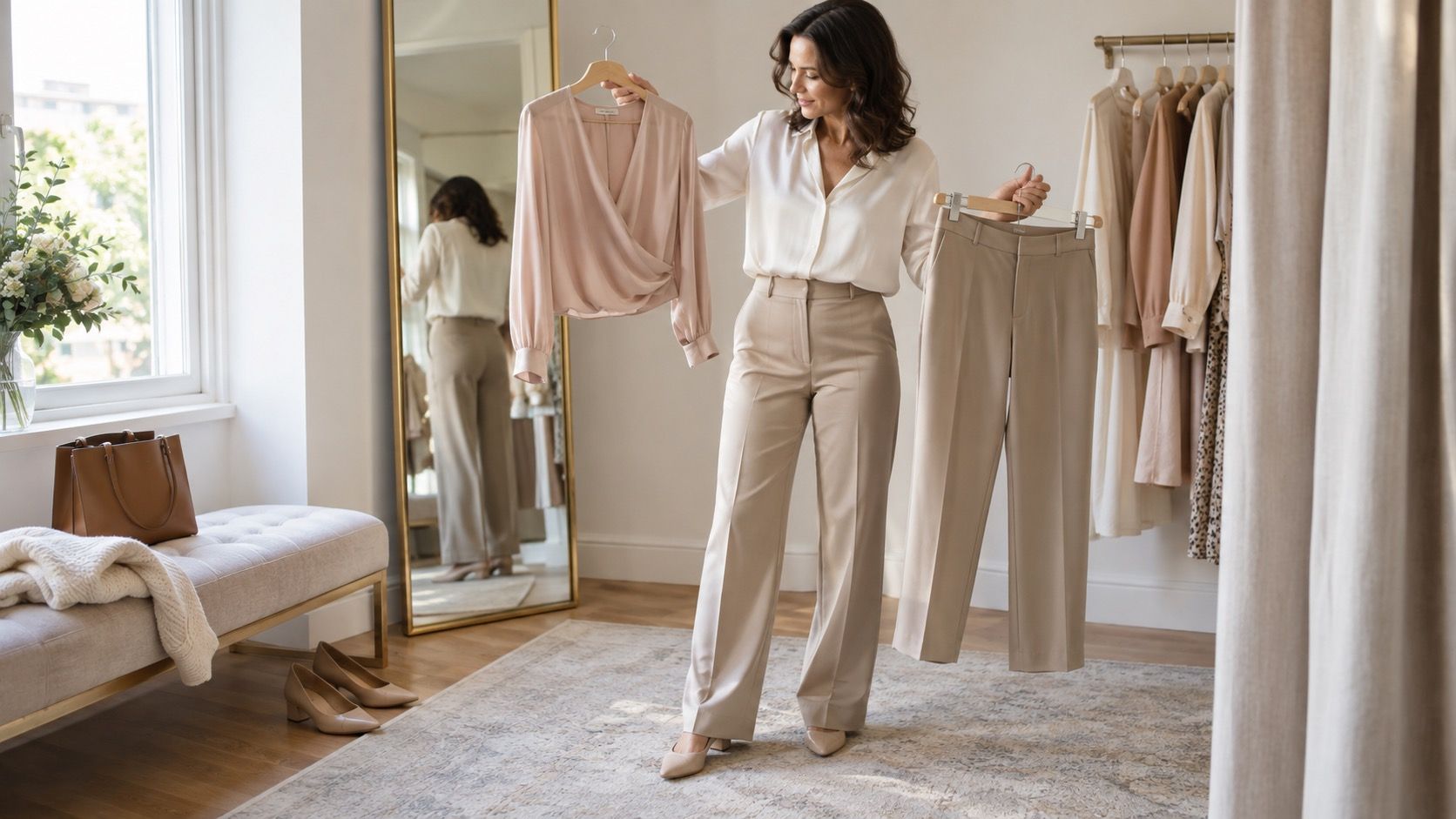
A soft waist is not the same as a tightly cinched waist. It can come from a wrap, a gentle tuck, a tie that sits loosely, a shaped seam, or a cardigan that ends near the waist. These details give the eye a place to rest without turning an outfit into an hourglass exercise. With trousers, try a mid- or high-rise pair with a relaxed leg and a top that has some drape. If both pieces are very loose, show a little structure through a neckline, a partial tuck, or a shorter outer layer.
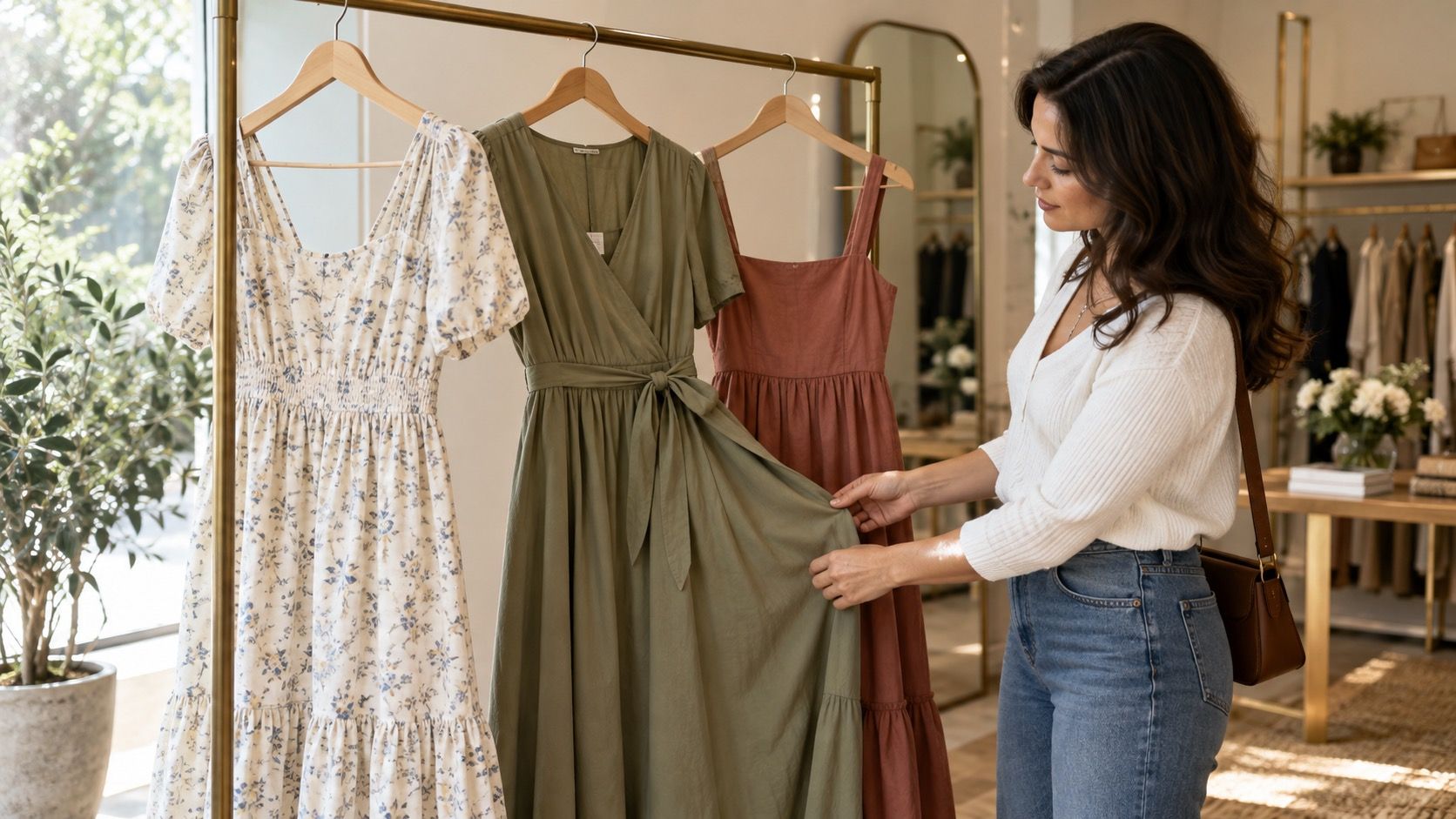
Dresses are a useful testing ground because they show line without the extra complication of matching separates. A softly belted shirt dress, a wrap dress with room at the shoulder, or a slip dress under a textured cardigan can all explore the same idea in different moods. Pay attention to where the fabric gathers. A gathered waist that sits too high can feel costume-like; one that drops too low may erase any sense of shape. Walk, sit, and lift your arms. A dress that needs constant rearranging is not serving a real-life wardrobe.
| Piece | Useful Soft Natural experiment | Watch for |
|---|---|---|
| Jacket | Relaxed shoulder and lightly shaped waist | Too much extra width at the shoulder seam |
| Top | Open neckline, gentle drape, rolled sleeve | Fabric that collapses or pulls across the bust |
| Trousers | Easy leg with a defined waistband | Volume both above and below the waist |
| Dress | Wrap, soft belt, or easy waist shaping | Overly tight gathering or a stiff, boxy fabric |
| Knitwear | Textured medium-weight knit | Very tiny detail that fights the larger line |
Use texture and organic detail without slipping into costume
Texture is often more convincing than decoration. A nubby knit, a braided belt, a suede loafer, a softly hammered earring, or a printed scarf with an irregular motif can add interest while preserving an easy line. You do not need all of them at once. One or two tactile elements are usually enough, especially if the rest of the outfit has relaxed fabric and a natural color relationship. If you feel as though you are dressing for a themed photo shoot rather than your own day, edit one detail out.
Organic detail does not have to mean florals or fringe. It might be a curved bag, an unevenly textured earring, a soft wave in a collar, or a print with movement rather than strict geometry. The practical test is scale. Tiny bows, miniature ruffles, and very precise little trims can look disconnected from a more open silhouette. A slightly larger, simpler detail usually reads more natural and is easier to repeat across a working wardrobe.
Make relaxed outfits work for workdays and occasions
For a casual office, start with one structured element and one softer one. A pair of straight trousers with a fluid blouse and a relaxed blazer can look professional without becoming rigid. For a more formal setting, choose clean construction in a softer fabric: a dress with a gentle waist seam, a long jacket with less padding, or a trouser suit with a matte, flexible weave. The point is not to avoid tailoring. It is to avoid tailoring that feels so severe you cannot breathe, sit, or move naturally in it.
Evening outfits benefit from the same principle. Instead of piling on sparkle, choose one memorable texture: velvet, a rich knit, soft leather, or a dress with a draped neckline. Then let the accessories follow the scale of the outfit. A medium statement earring or a rounded clutch can be more effective than several tiny, intricate pieces. Take a photo in the light where you will actually be going out; a fabric that looks subtle at home can become shiny or flat under restaurant lighting.
Keep inspiration separate from strict rules
A Soft Natural style guide should give you ideas, not remove options. If you love a crisp white shirt, wear it and soften the outfit with denim, jewelry, a less rigid trouser, or an open neckline. If you enjoy a very fitted dress, that preference matters more than a framework’s ideal. The system is useful when it helps explain why certain combinations feel especially easy, not when it makes you second-guess every button and hem.
Build a small set of evidence from your real wardrobe. Photograph a relaxed blazer, a softer waist dress, a textured knit, and a sharper outfit you also enjoy. Compare how they feel through a full day rather than only how they look in a posed mirror selfie. Over time, you may find that you like the Soft Natural direction for weekend clothes but prefer cleaner lines at work. That is a style preference, not a failure to follow a type.