Dramatic Classic advice can sound rather formal: symmetry, precision, clean geometry, controlled contrast. Read too literally, it suggests identical blazers and careful posture. The useful interpretation is more relaxed. In Kibbe discussions, Dramatic Classic explores a balanced overall line with a touch of sharpness or elongation. Clothes often work when they are well cut, moderately structured, and free of visual clutter. That still leaves room for denim, colour, softness, and a recognisable personality.
What Dramatic Classic is meant to describe
Dramatic Classic is an Image Identity idea, not a list of body measurements and not a promise that every tailored garment will fit. The Classic element refers to balance, symmetry, and moderation. The Dramatic influence adds a little crispness, a straighter line, or a more elongated impression. People exploring this direction often find that garments with clear edges and an organised silhouette feel easier than very fussy decoration or extremely oversized shapes.
Softness is not forbidden. A fluid blouse can work beautifully when its shape is clean and its details are restrained. A relaxed sweater can work when it has a defined shoulder and a hem that does not swallow the rest of the outfit. Think in terms of visual editing. When a garment has ruffles, a bold print, huge sleeves, a heavy belt, and rough texture all at once, it may compete with a preference for a composed line. One expressive element is different from five unrelated ones.
Use symmetry and clean outlines as a starting point
Symmetry is easy to test because it appears in ordinary clothes. A centred button placket, matched lapels, a straight trouser crease, a simple crewneck, and a balanced hemline all create order. Try an outfit with a clean shirt, straight trousers, and a jacket that closes at the centre. Then compare it with an uneven hem, a very asymmetrical top, and a large dangling accessory. The result is not a pass-or-fail test, but it may show which visual rhythm lets you look composed with less effort.
Clean outlines come from fit as much as design. A blazer cannot create a sharp line if its shoulder seam hangs off the arm or its sleeve bunches at the elbow. A straight skirt loses clarity when it is too tight to walk in. Check garments from the side and back, where pulling and excess fabric are clearer. Tailoring a sleeve length or trouser hem may improve an outfit more than buying a new Dramatic Classic item. The aim is not stiffness; it is clothing that knows where it is meant to sit.
Choose tailoring that moves through a normal day
Structured fabric is useful when it holds a clean line, but it should not turn daily life into a careful performance. Look for wool blends, substantial cotton, smooth denim, ponte, crepe, or suiting with a little give. Do the sit-down test in every tailored piece. If the jacket pulls across the upper back when you reach for a steering wheel, or the trousers crease hard at the hip after ten minutes, the cut may be too restrictive. Good tailoring lets you forget about it after leaving the mirror.
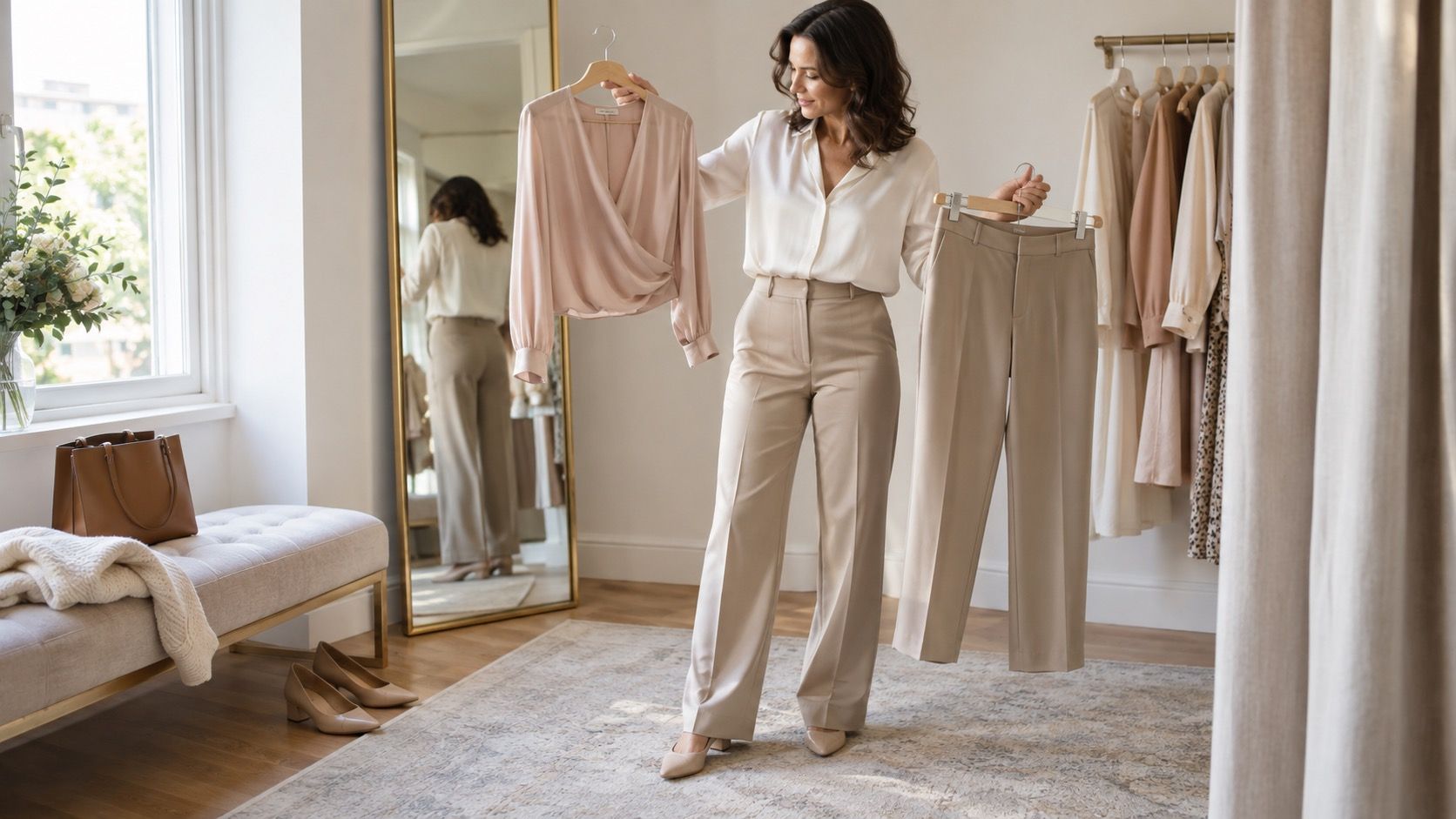
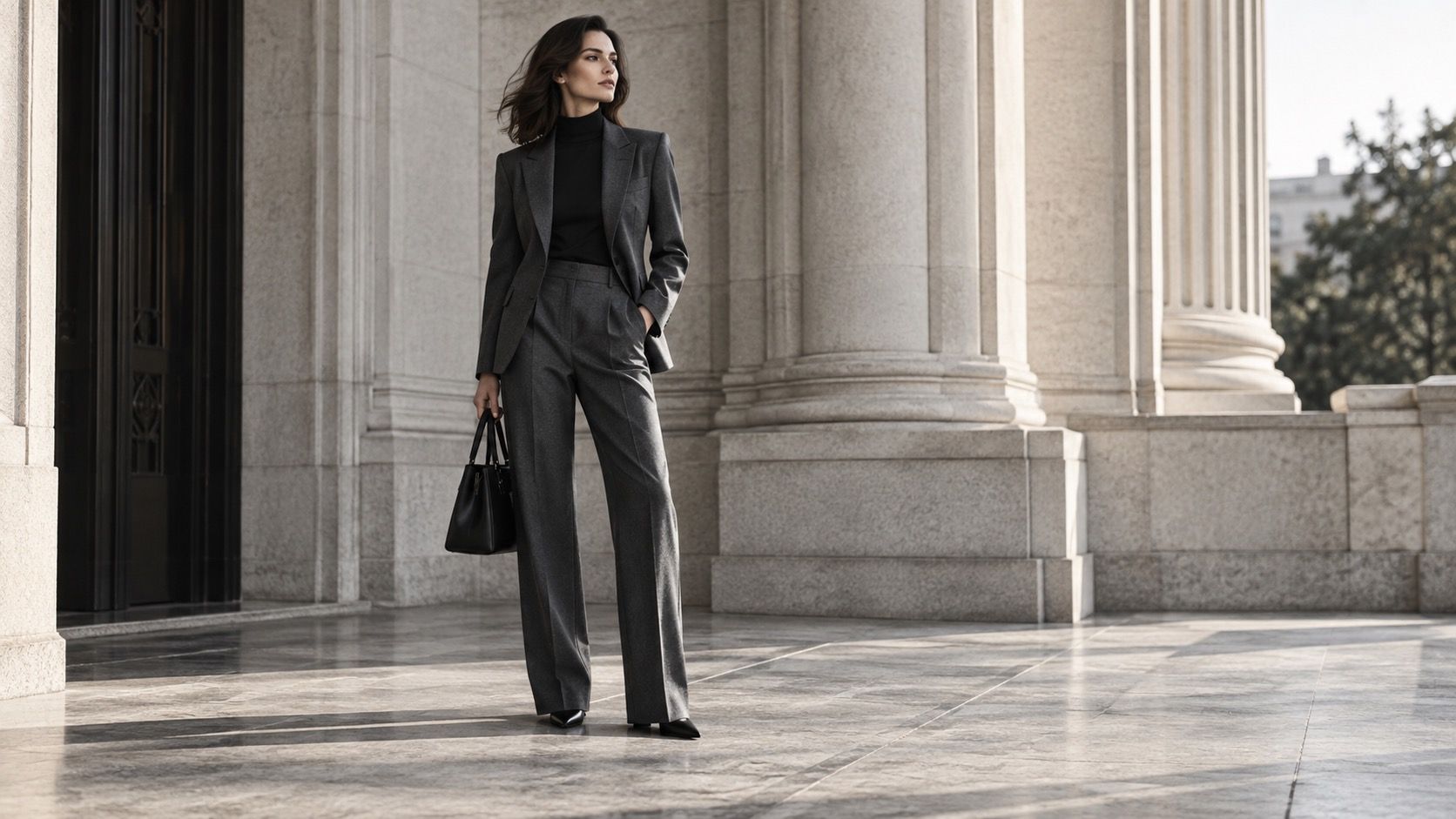
For a first experiment, use a simple formula: a jacket with a defined shoulder, a top with an uncomplicated neckline, and straight or gently tapered trousers. Keep colours related rather than matching every piece exactly. This gives you a clear base for observing line. Later, add a stronger shoe, a bright scarf, or a bolder lip colour without losing the structure that made the outfit work. Dramatic Classic outfits need not be neutral; they benefit from a deliberate hierarchy.
| Outfit element | Useful starting point | Common overcorrection |
|---|---|---|
| Jacket | Defined shoulder, clean lapel, moderate length | Rigid padding or a fit too tight to move in |
| Trousers | Straight or tapered leg with a clean crease | Extreme volume or overly clingy fabric |
| Dress | Controlled shape and a balanced neckline | Too many gathers, bows, or cut-outs |
| Accessories | Polished medium-scale pieces | Several tiny details or oversized statements |
| Colour | Clear but moderate contrast | Head-to-toe severity that feels unlike you |
Build everyday outfits from familiar pieces
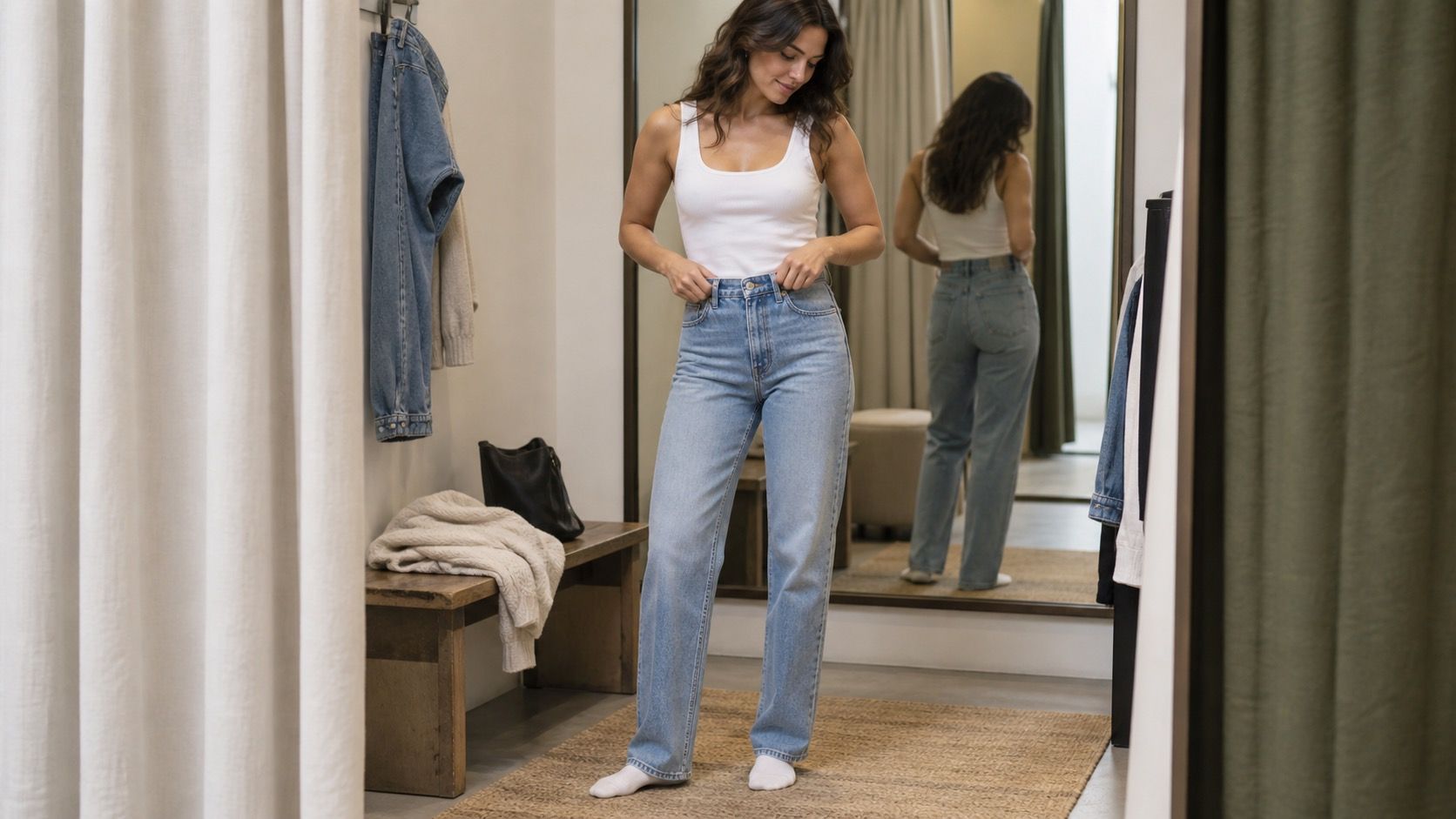
Jeans are not outside this style direction. A dark straight-leg pair, a crisp knit, and loafers or a sleek sneaker can make an uncomplicated everyday uniform. The useful details are proportion and finish: hems that work with the shoe, denim without random distressing, and a top whose neckline and shoulder line do not collapse. If you prefer a softer sweater, choose one with a smooth knit and tidy hem, then add a watch, belt, or structured bag for definition.
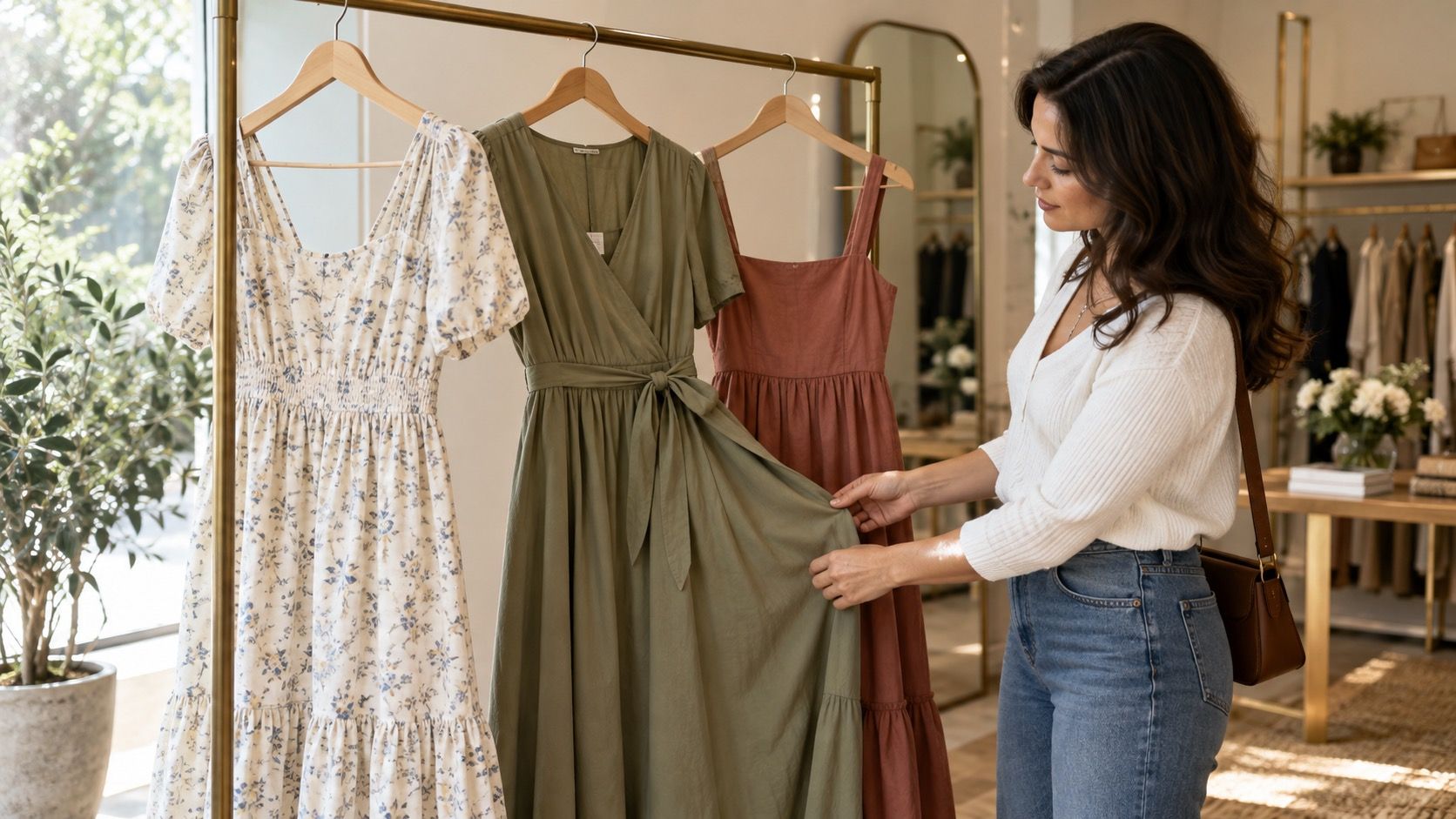
For warmer days, a sleeveless shell, tailored shorts of a comfortable length, and a simple sandal can have the same organised quality. A linen shirt can work when it has a clean collar and is not several sizes too large; a knit polo can work when its ribbing and placket are simple. Take note of the clothes you reach for on rushed mornings. The best evidence is an outfit that survives commuting, lunch, and a late errand while still looking intentional.
Use moderate contrast for occasions
For evenings or formal events, a clean line gives you freedom to choose one stronger element. A column dress in a saturated colour, a tuxedo-inspired suit with a silk cami, or a sharply cut midi dress can feel special without layers of decoration. Moderate contrast may come from black trousers with an ivory top, a navy dress with a metallic shoe, or a deep green suit with a lighter blouse. The contrast should guide the eye rather than divide the outfit into unrelated pieces.
Accessories work best when they support the main silhouette. Medium-scale earrings, a polished cuff, a structured clutch, or a shoe with a clean toe shape can provide finish. Before leaving, remove one item and see if the outfit becomes clearer. This edit is especially useful with jewellery: several delicate pieces can look fussier than one intentional one, while one enormous statement may overpower a restrained dress. The desired effect is considered, not severe.
Keep the clean line from becoming severe
The quickest way to make a structured outfit feel harsh is to make every element dark, tight, shiny, and angular. Most people need some ease somewhere, even when they prefer tailored clothes. It might come from a matte fabric, a rounded neckline, softer hair texture, a warm neutral, a fluid blouse, or simply an open jacket. The balance is personal. If you feel more like you are wearing a costume than clothing, loosen one control rather than abandoning the whole direction.
Pay attention to comfort and posture too. Clothes that force you to stand unnaturally upright do not read as elegant; they read as uncomfortable. A well-placed waist seam, the right sleeve length, and shoes you can walk in will do more for presence than an aggressively sharp silhouette. Use this Dramatic Classic style guide as a way to refine the clothes you already enjoy, not as proof that seriousness is the only way to look polished.
Let the framework inform, not police, your choices
As with every Kibbe category, experimentation is more useful than obedience. Put a structured jacket beside a relaxed cardigan, compare a clean dress with a highly detailed one, and notice which options make you feel most like yourself. Photographs help when taken at the same distance and in ordinary light, but real-life wear matters more. Does the garment work when you sit down, carry a bag, or spend a full day in it? Does it feel like a useful version of your taste?
You can enjoy oversized denim one weekend, a draped top on holiday, and a precise suit for work without invalidating anything. The Dramatic Classic lens is simply a way to understand why clean structure and symmetry may be dependable tools for you. Keep the tools, discard the pressure, and use the result to make your wardrobe more flexible rather than more restricted.