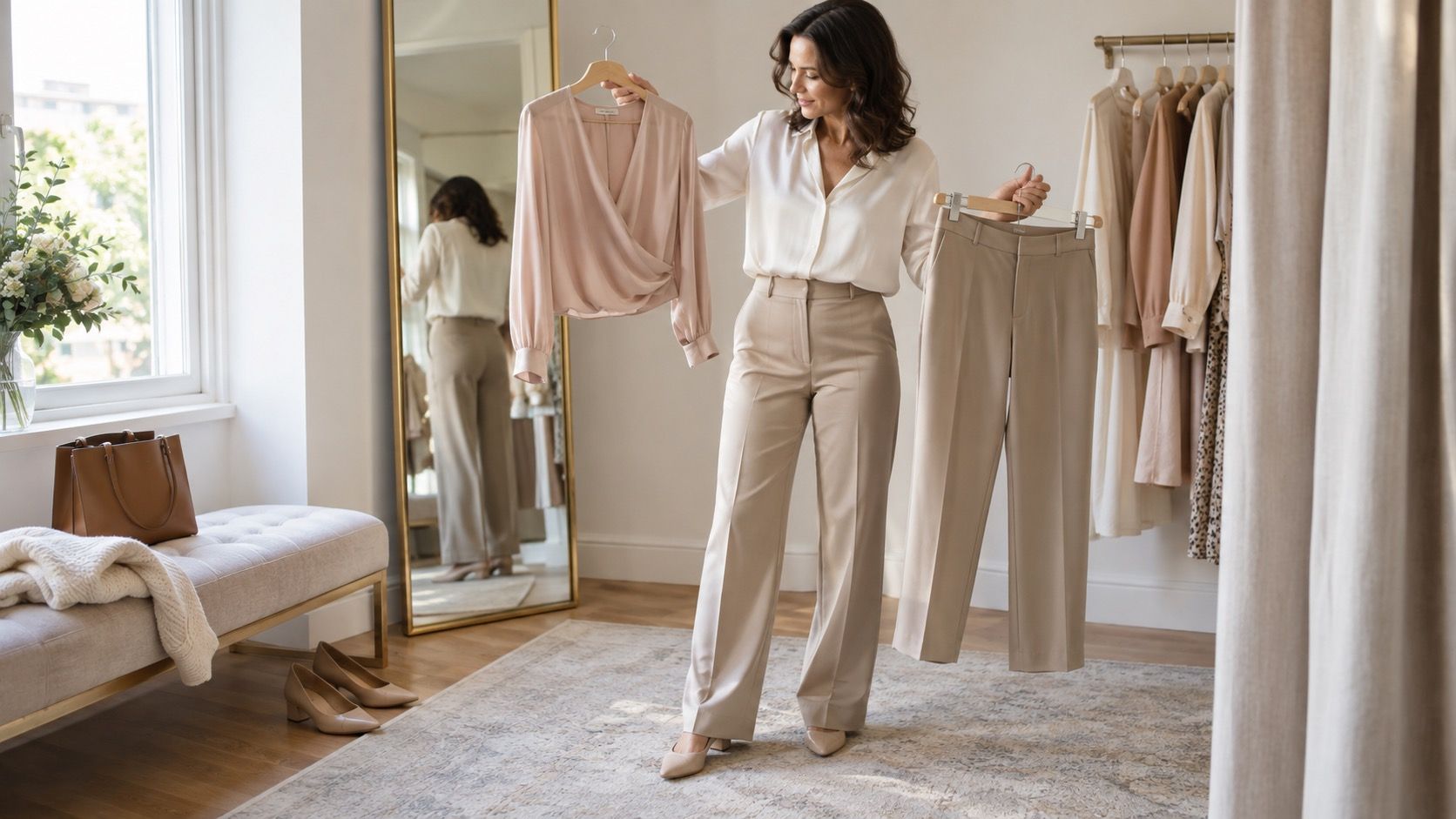
An inverted triangle body shape usually means the shoulder line reads broader than the hips. It is common in swimmers, people with athletic builds, and plenty of bodies that do not fit a neat category at all. Broad shoulders are not a problem to hide. They simply give jackets, necklines, and sleeves a stronger starting line, which means lower-body volume and fabric movement can have a bigger effect on the whole outfit.
Start with the shoulder line you actually have
Before trying broad shoulders outfits, notice whether the width comes from your bones, the cut of a garment, or both. A dropped shoulder seam can add width even when your own shoulders are moderate. A set-in sleeve that lands at the shoulder point can look crisp without expanding the frame. Raglan sleeves soften the boundary, while puff sleeves and shoulder pads can make the upper body feel more architectural.
Fit is the first check. A blazer with a seam hanging down the upper arm is too large through the shoulder, even if the waist feels comfortable. Sizing up to accommodate the bust and then accepting a loose shoulder often makes a jacket look more imposing than it needs to. Look for brands with separate bust and shoulder measurements, or choose a size that fits the shoulder and alter the body if the fabric allows.
There is no rule against dramatic shoulders. A structured coat, a sleeveless halter, or a strong boat neckline can look excellent when that is the point of the outfit. The useful distinction is between a deliberate silhouette and a garment that is fighting your movement. Reach forward, drive, and put your hands in your pockets. If the upper back pulls or the sleeve twists, style advice cannot fix the cut.
Choose necklines and sleeves for comfort, not concealment
Necklines guide the eye, but they do not have to narrow anything. A V-neck, open collar, or soft scoop creates a vertical opening and can make a tailored shirt feel less formal. A square neckline makes a horizontal frame and can look balanced with a full skirt or wide trouser. Crew necks work well too, especially in a fine knit or a top with an open layer over it.
When learning how to dress an inverted triangle shape, sleeve placement matters more than sleeve length. Cap sleeves that finish at the widest part of the shoulder can add a shelf-like edge. A sleeve that falls straight or widens below the elbow creates movement farther down the arm. A simple rolled cuff is often enough to break a solid block of fabric without adding ruffles or bulk.
Fabric changes the result. A stiff cotton poplin sleeve holds its shape; a fluid viscose sleeve follows the arm. If you enjoy volume, put it where you like it rather than avoiding it on principle. A blouse with a gentle bishop sleeve can work beautifully with a substantial skirt, whereas the same blouse with a tight pencil skirt may feel top-heavy because all the visual activity is above the waist.
Add lower-body movement when you want a more even visual weight
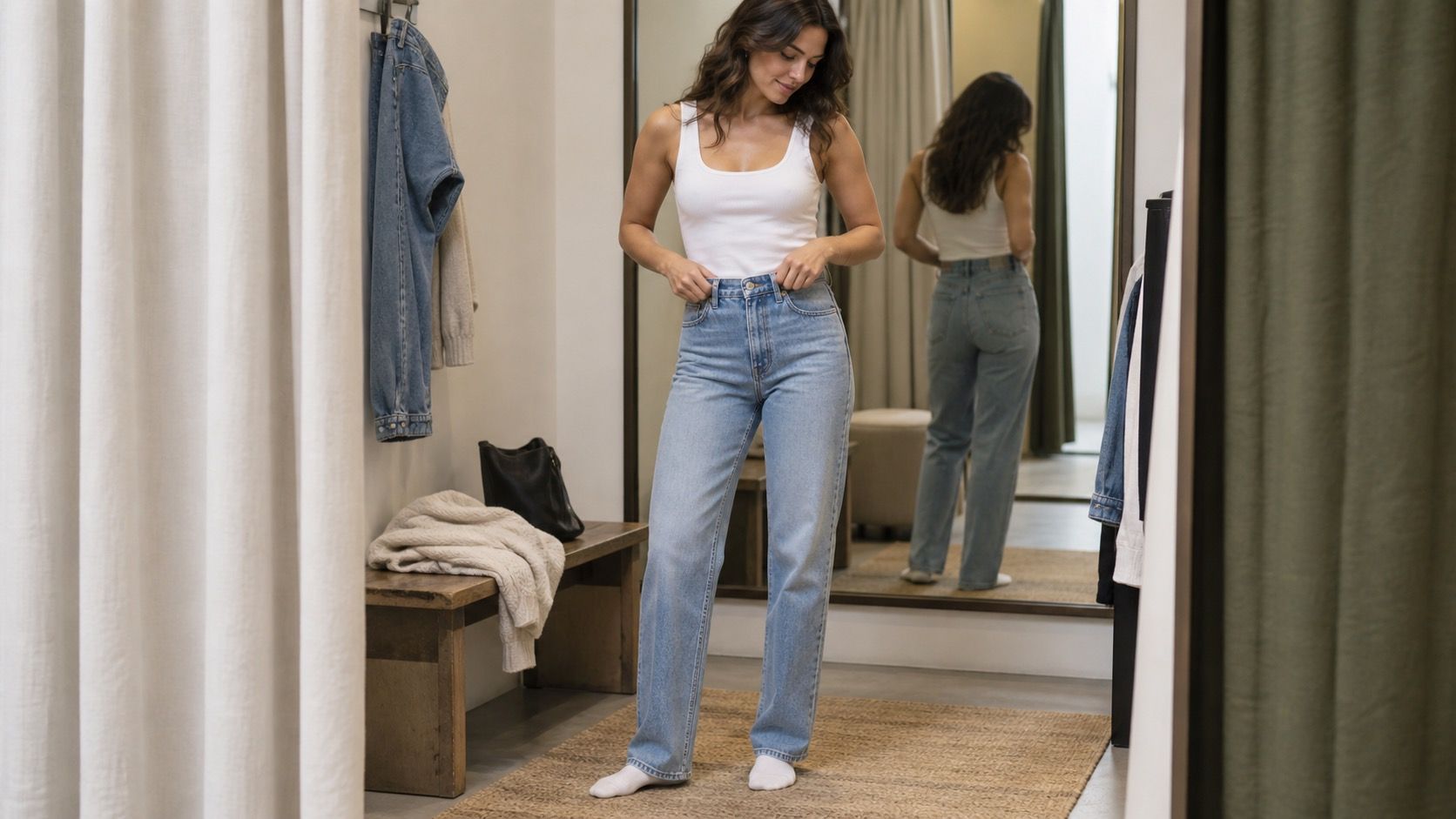
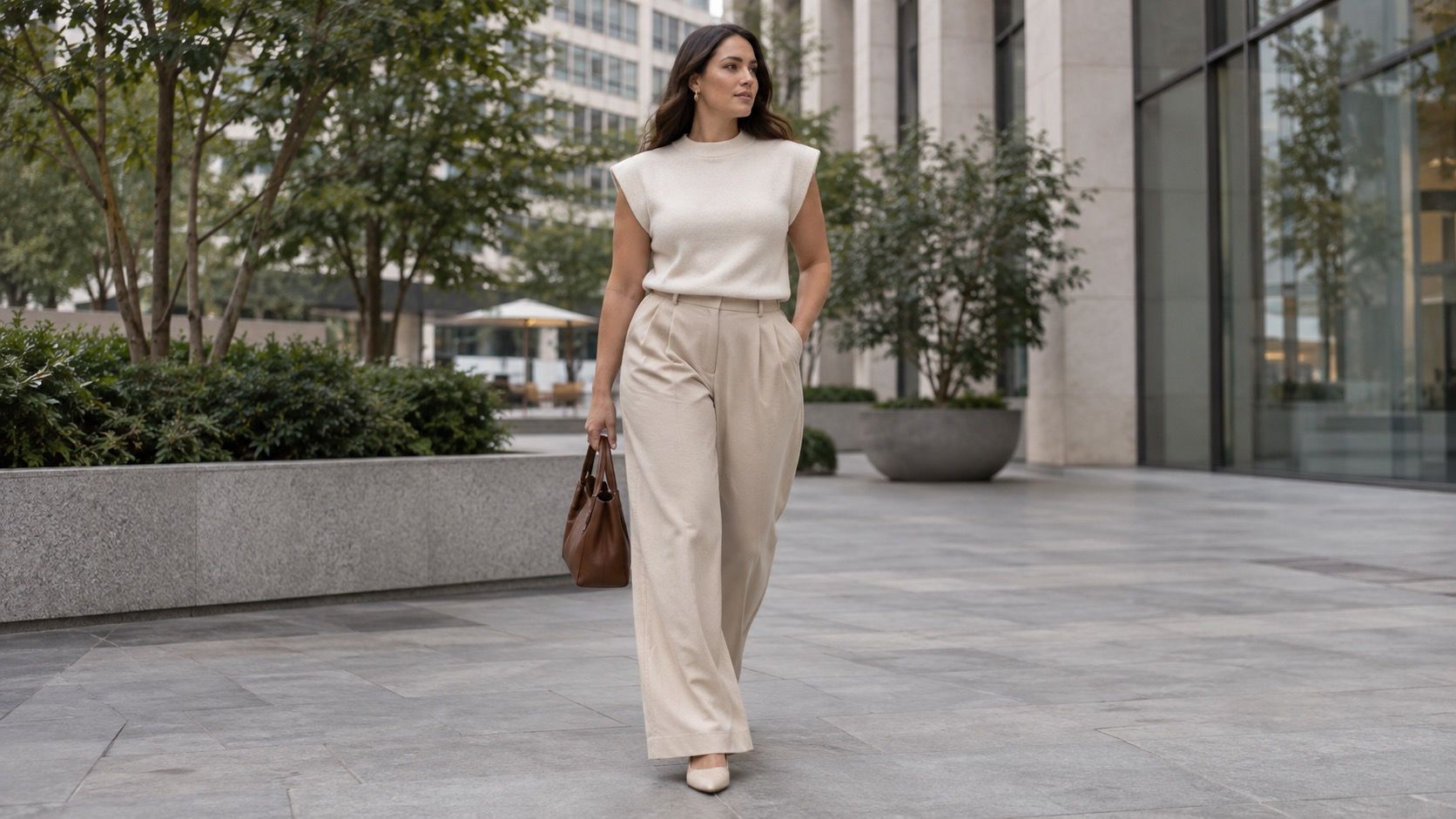
Adding movement below the waist is an option, not a requirement, but it gives an outfit an easy counterpoint. An A-line skirt creates space from the hip down and pairs well with a fitted tee, shirt, or knit. Wide-leg trousers do something similar in a more practical everyday shape. The key is the fit at the top: a wide leg that starts with a clean waistband looks intentional, while a pair that bunches at the crotch or gaps at the back will not feel good regardless of proportion.
Patterns, texture, and pockets can all move visual interest downward. A dark plain top with a checked trouser, a denim midi skirt, or trousers with a visible front pleat gives the lower half some presence. This does not mean every look needs a print. A light-colored wool trouser against a darker sweater has enough contrast, and a pair of loafers or boots with a little weight can finish the line.
| Lower-body option | What it offers | Check before buying |
|---|---|---|
| A-line skirt | Ease through the hip and a clean swing | Waistband stays flat when sitting |
| Wide-leg trouser | Movement and grounded proportion | Hem works with your usual shoes |
| Bootcut jean | Subtle width below the knee | Knee break sits in the right place |
| Textured midi skirt | Interest without extra bulk on top | Fabric does not cling to the lining |
Use dresses, jackets, and coats as complete silhouettes
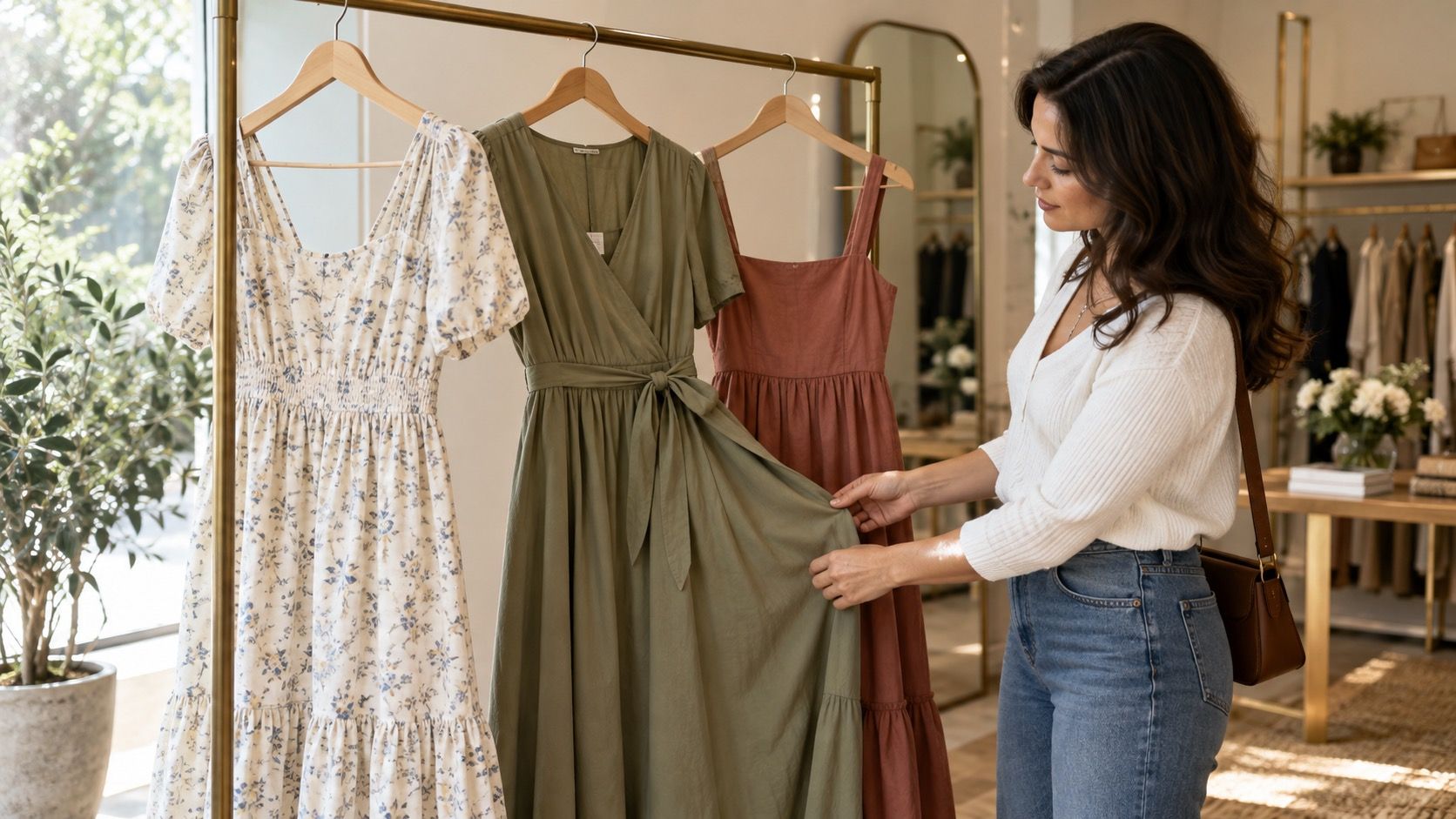
Dresses can make choosing proportions simpler because the line is already connected. A wrap dress gives adjustable waist definition and a V-shaped opening. A shirt dress can be worn loose, belted, or layered over trousers, depending on the day. An A-line dress adds width through the skirt, while a straight knit dress keeps the long line and lets a shoe or coat do the balancing.
For jackets, look at length and closure. A single-breasted blazer worn open creates vertical space down the center. A cropped jacket can work over a high-rise skirt or trouser, but one that ends exactly at the widest hip point may feel abrupt. Longer coats with a soft lapel often skim the body better than a very boxy double-breasted style, though a double-breasted coat can be satisfying when you want a strong, tailored look.
Swimwear and activewear are places where comfort outranks visual theory. A supportive sports bra, a racerback tank, or a wide strap may suit the activity and feel right on the body. If a suit cuts into the shoulder or pulls across the upper back, change the size or style. There is no prize for making a functional garment follow a styling rule meant for a mirror.
Let rigid styling rules stay optional
Advice for an inverted triangle body shape often turns into a list of forbidden necklines, sleeves, and jackets. That approach is tiring and usually impractical. Personal style may include sharp shoulders, fitted trousers, or a minimal dark outfit because you like the look. A satisfying wardrobe has room for both a balanced outfit and a deliberately powerful one.
Use a quick three-part check instead: does the garment fit at the shoulder, can you move naturally, and does the outfit have a focal point you actually enjoy? If the answer is yes, you do not need to add an A-line skirt just to satisfy a formula. If an outfit feels off, change one thing: open the neckline, choose a heavier shoe, add a wider trouser, or remove an overly rigid layer.
Keeping a few notes makes online shopping less random. Record the shoulder measurement of a favorite jacket, the rise of trousers that sit well, and the sleeve shapes you reach for. That information is more reliable than a body-shape chart because it reflects your own build and routine. The best styling choices make broad shoulders feel like part of the outfit, not something it is trying to negotiate around.