An hourglass body shape is often presented as if it comes with a ready-made uniform: wrap dress, belt, heels, repeat. That advice misses the point. The useful part of the label is simply that shoulders or bust and hips tend to feel balanced, with a waist that is visibly or comfortably narrower. From there, the job is to choose clothes that move with you and to decide how much waist definition you actually want on a given day.
Recognise the proportion, then forget the costume
Hourglass proportions usually mean the upper and lower body carry a similar visual width while the waist creates a noticeable inward line. That can appear on a small or large frame, with a fuller or smaller bust, and at many heights. It is not determined by a single measurement. Look at how a fitted dress, a tucked shirt, or a waistband sits rather than trying to match an illustration.
The common fit issue is not a lack of shape; it is a garment that fits the widest point and then floats around the waist, or a garment that fits the waist and strains at bust or hips. Start with the size that gives the body room to breathe. A slight waist adjustment from a tailor is often more convincing than squeezing into a smaller size that looks neat only while you are standing still.
Choose dresses that follow instead of fight the body
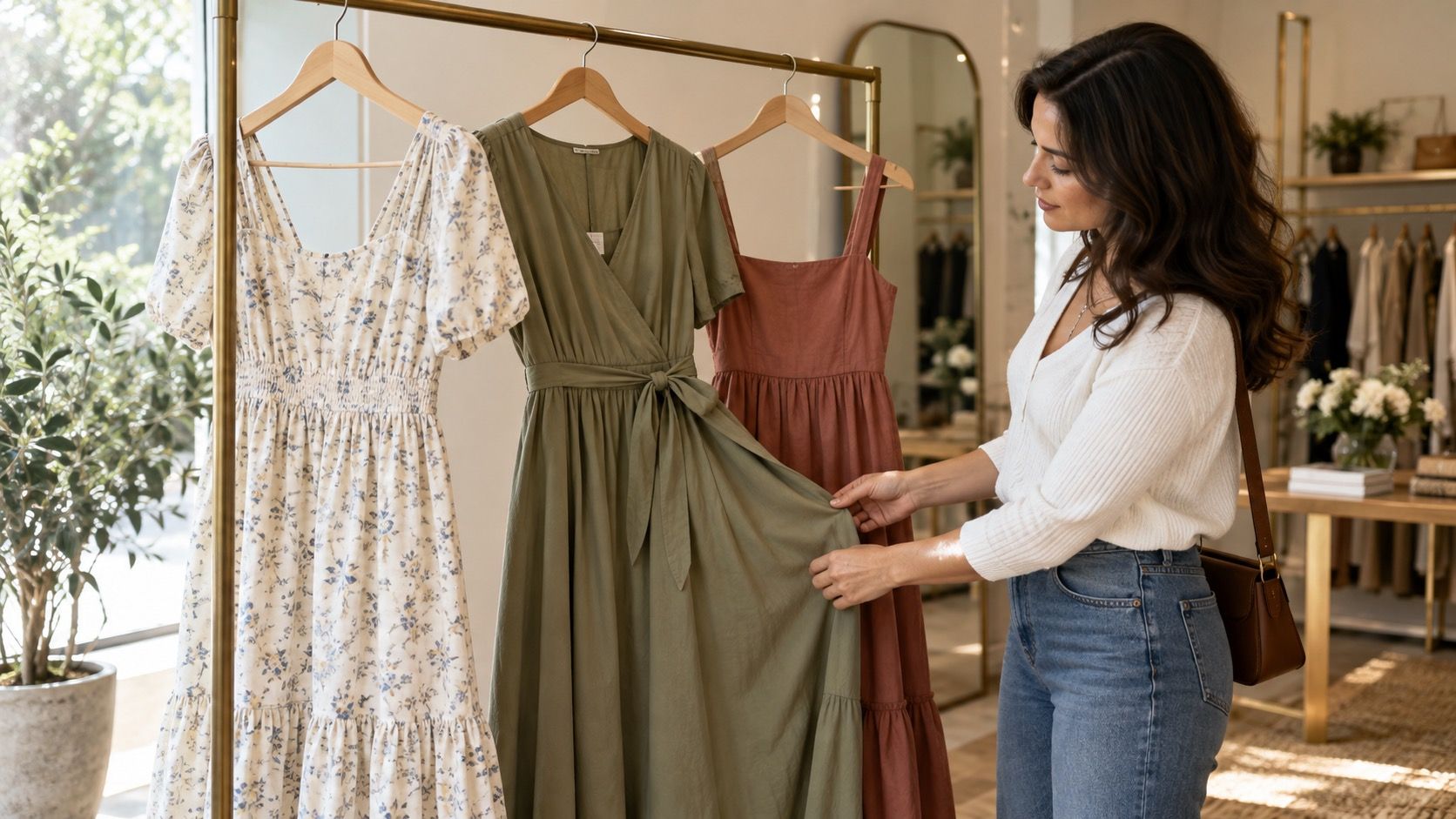
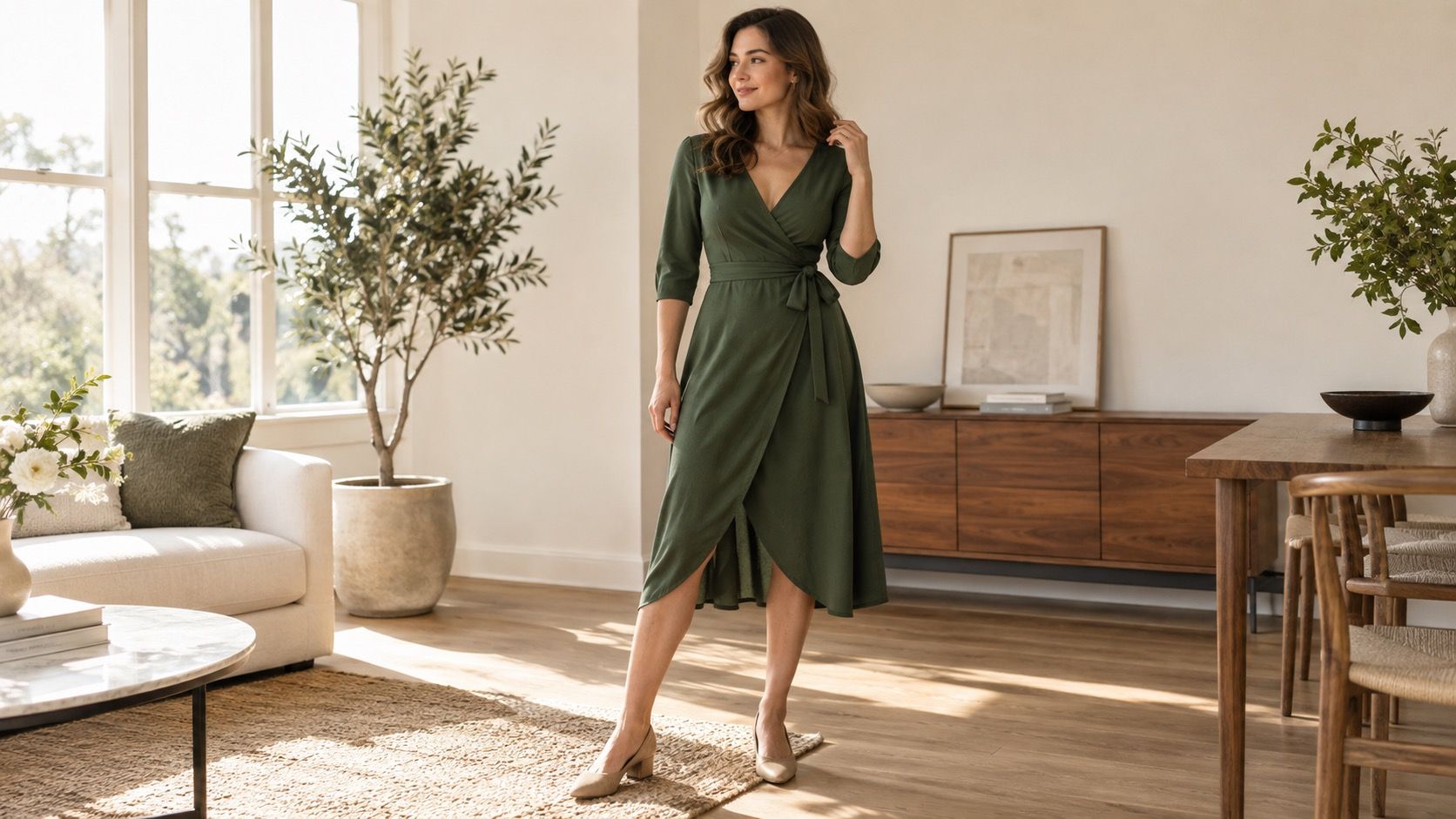
A wrap dress is popular for good reason: its diagonal line can accommodate bust variation and its tie allows small changes through the waist. Before buying, sit down and check that the neckline stays where you want it and that the skirt overlap does not pull open when you walk. A wrap is not automatically flattering if the fabric is thin, the tie sits too high, or the shoulder seam has no stability.
Fit-and-flare, softly belted shirt dresses, and dresses with shaped seams can work just as well. The decision point is where the waist seam lands. It should meet your natural waist or be intentionally higher, not slice through the fullest part of the ribcage. In a changing room, turn sideways and raise your arms. A dress that makes a clean line only with your arms by your sides is asking too much from ordinary life.
| Piece | What to test | Adjustment worth considering |
|---|---|---|
| Wrap dress | Neckline and skirt overlap while seated | Add a small snap or use a camisole if needed |
| Belted dress | Belt sits at the natural waist without rolling | Swap a stiff belt for a softer, narrower one |
| Fitted blazer | Button closure at bust and hip | Size for the bust and nip the waist lightly |
| High-rise trousers | Waistband stays flat when walking | Alter the back waist rather than cinching hard |
Let tops and jackets show the waist on your terms
For everyday hourglass figure outfits, a partial tuck, a short cardigan, or a top that ends near the high hip can be enough definition. Not every outfit needs a visible belt. In fact, a tight belt over a thick knit can create bulk at the very point you were trying to highlight. A smooth knit, a gently shaped shirt, or a cropped jacket often gives a cleaner result with less effort.
With jackets, fit the shoulders and bust first. A blazer that pulls across the front will not be rescued by a waist seam, while one that is a touch roomy through the waist can be altered. Longer single-breasted jackets can look elegant when left open, creating two vertical lines rather than closing into strain. Check where the hem ends: the high hip and the widest hip can give two completely different impressions.
Test trouser and skirt shapes rather than chasing a rule
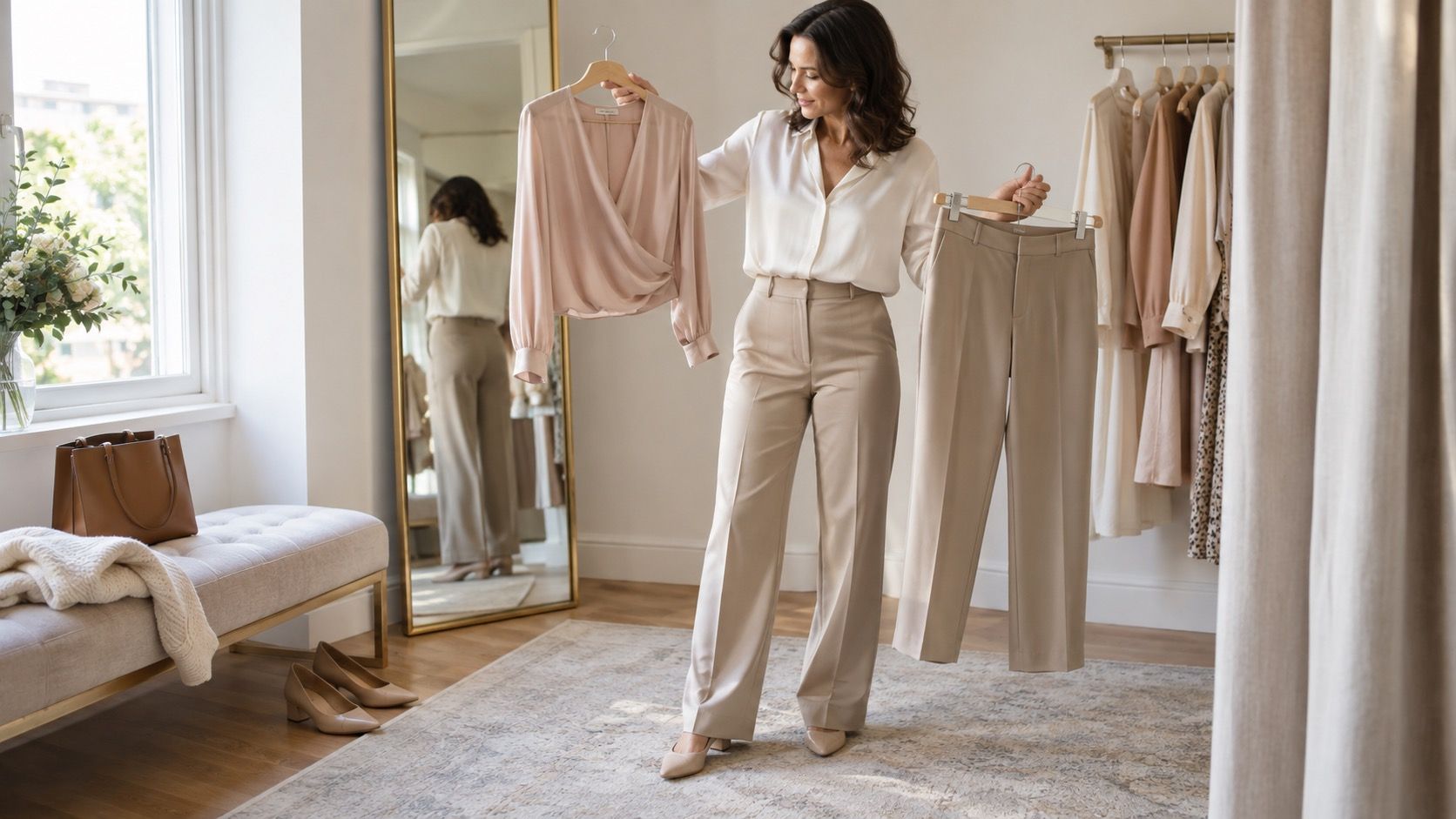
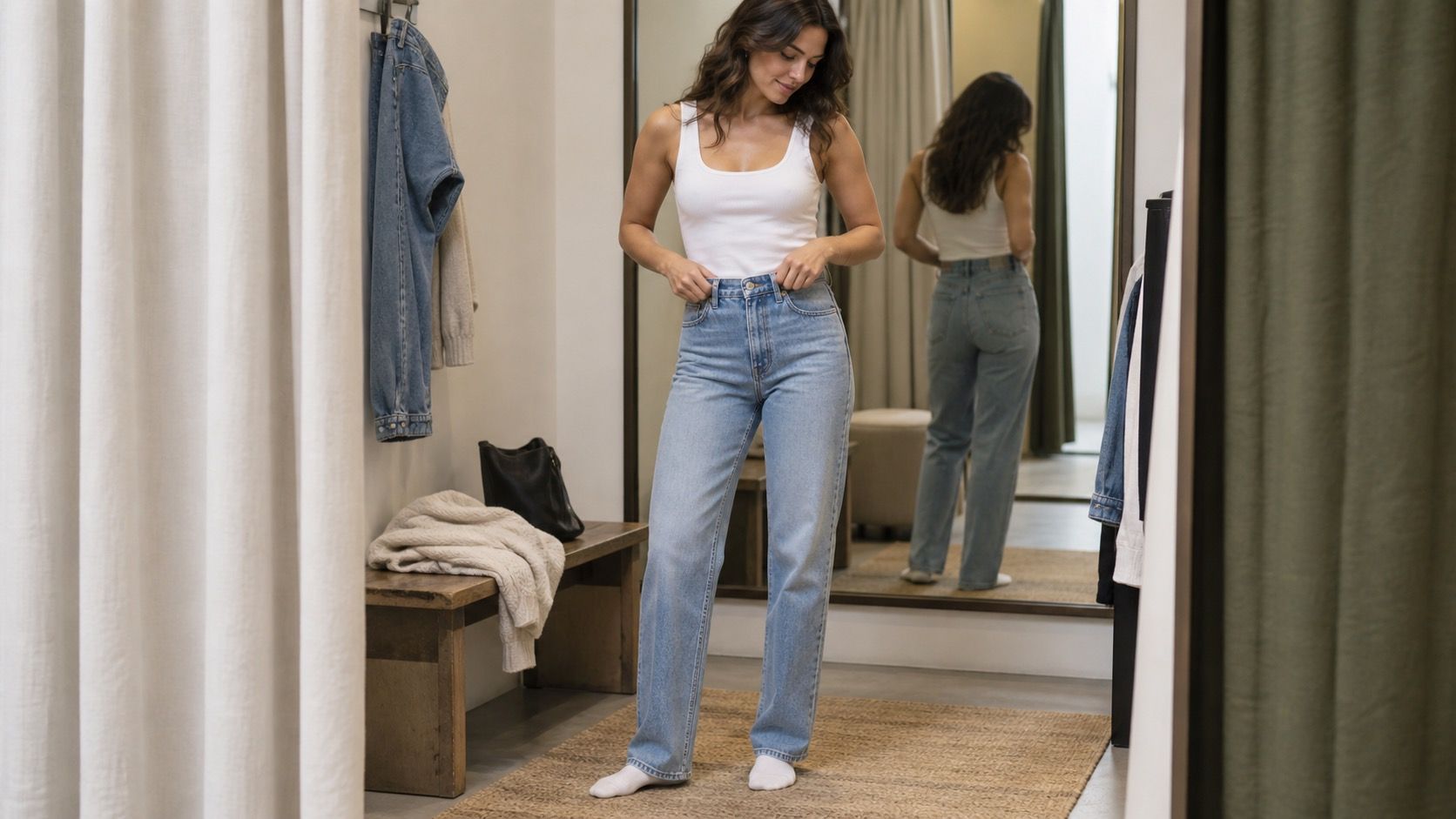
High-rise trousers often make sense for an hourglass body shape because they meet the waist instead of cutting across a fuller hip. Still, rise is personal. A very high waistband can feel restrictive on a short torso or press uncomfortably when seated. Try a moderate high rise with a curved waistband, then compare it with a straight waistband. The second may gape at the back even when the first feels calm and secure.
Straight, gently wide, bootcut, and tapered legs can all work; the important detail is the hip fit and fabric drape. Choose trousers that skim rather than cling where you prefer ease. For skirts, pencil shapes look polished when there is enough walking room, while A-line or bias cuts can provide movement without erasing the waist. Do a stair test and a chair test before trusting a mirror-only verdict.
Use fabric and belt placement to change the mood
Fabric is often the difference between defined and overdone. A medium-weight crepe or cotton poplin can hold a shaped seam without outlining every curve. Soft jersey can be comfortable but may cling at the bust and hips; look for a denser knit or a lining if you want a smoother line. Stiff, heavily gathered fabric adds volume quickly, especially when it is concentrated at the waist.
Belt placement is a small but powerful experiment. Try the belt at your natural waist, a finger-width above it, and lower on the hip over the same dress. Take a photo from a normal distance. One position may lengthen the leg, another may feel more relaxed, and a third may simply be wrong for that garment. How to dress hourglass is not about preserving a prescribed outline; it is about noticing which proportion lets you forget about your clothes once you leave the house.
Fix the familiar problems before buying more clothes
If button-down shirts pull at the bust, size up and have the body narrowed, choose a stretch poplin, or look for a darted style with enough room built in. If waistbands gape, a contoured waistband or a simple alteration is usually better than a belt pulled so tight it bunches the fabric. If a coat fits your hips but hangs too loosely above them, an open front or a tie belt can restore some shape without turning outerwear into shapewear.
Keep the test practical. Can you drive, eat lunch, reach a shelf, and take a long walk in it? Does the garment still look like itself after an hour? These checks protect you from the most exhausting version of hourglass advice, where every piece of clothing must announce a waist. Definition can be clear, subtle, or absent; comfort and choice are the parts that matter.