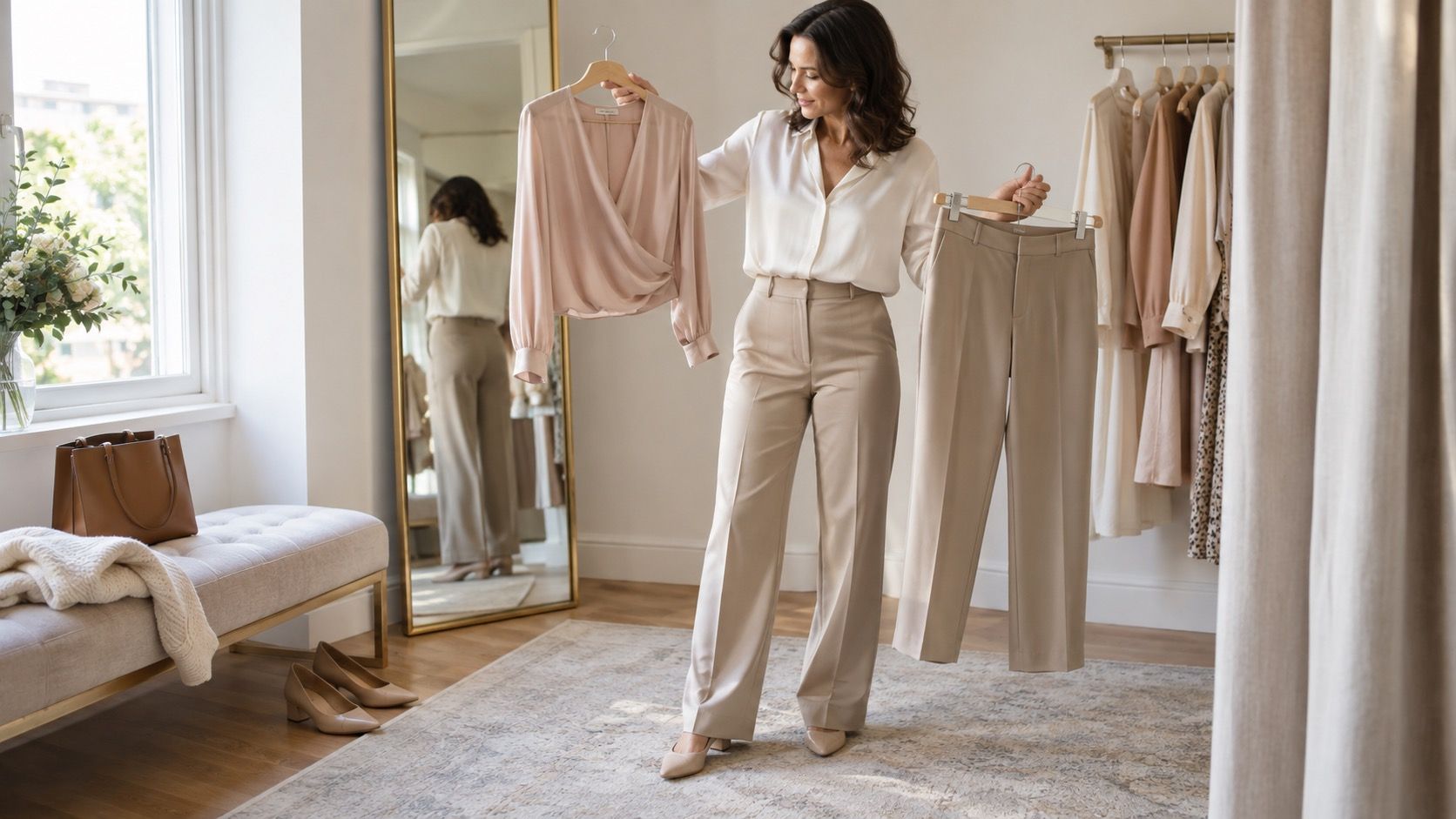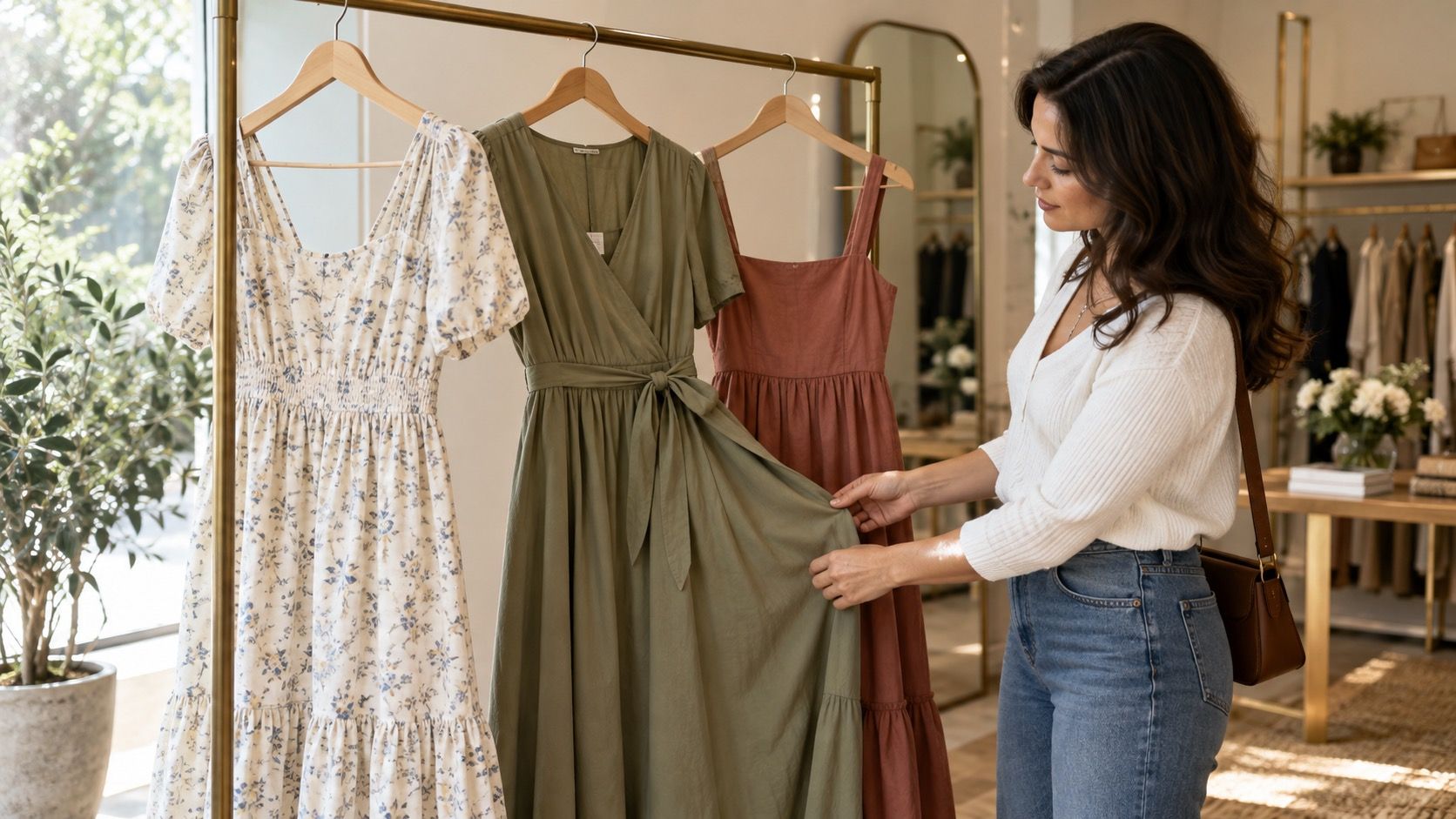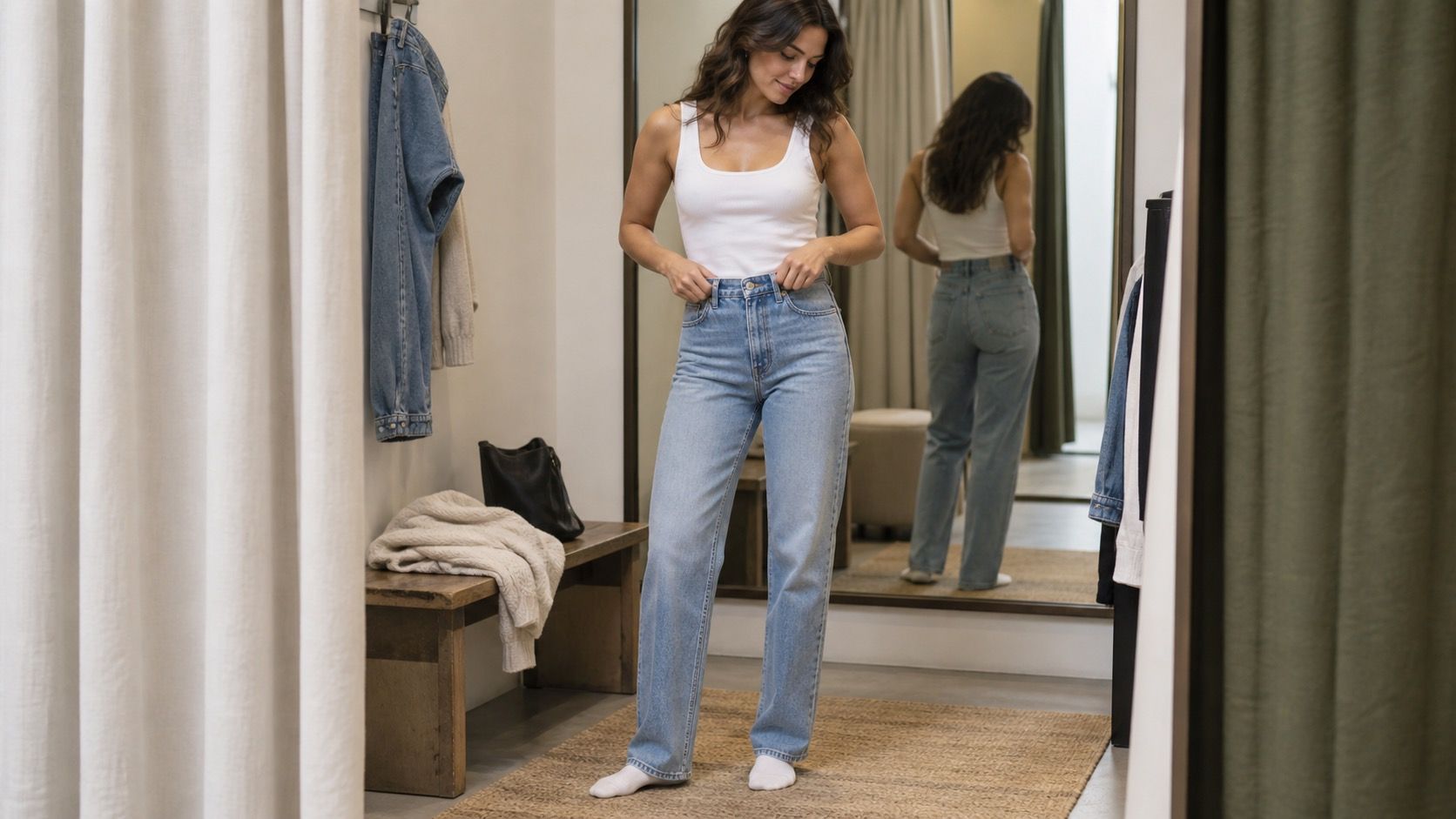
Most size charts promise certainty with a handful of numbers, then leave people staring at two possible sizes. The missing piece is that body shape and clothing fit are about three dimensions, movement, and the garment pattern, not a single hip or bust measurement. A chart is still useful, but it works best as a starting point for questions: where does this piece need room, where should it sit, and which part can be adjusted later?
Why one size chart cannot describe every body
Ready-to-wear brands build around a fit model, not every possible arrangement of shoulders, bust, waist, hips, torso length, and leg length. Two people with the same chest and hip measurements may need different shirt sizes because one has broader shoulders or a fuller upper arm. The same can happen with trousers when one person has a longer rise or more curve through the seat. Neither body is failing the chart; the garment is simply a standard pattern.
Start by identifying the measurement most likely to limit the garment. For a woven button-up, it might be the upper bust, shoulder width, or bicep. For jeans, it is often the hip, thigh, or rise. For a blazer, the shoulder seam and upper back matter first because those are difficult and expensive to alter. A loose waist can often be taken in. A shoulder that is too narrow cannot be made comfortable by wishful thinking.
Clothes for body type are sometimes presented as a style puzzle, but fit comes before silhouette. A dramatic wide-leg trouser can suit many proportions if the waistband stays put and the inseam is right. A body-skimming dress can work on many bodies if the bust darts land at the bust and the fabric has enough ease to walk. The garment gets to be judged on its construction before anyone decides whether it is flattering.
Check three fit points before judging the whole outfit
The shoulder seam, the waist or rise, and the point of greatest tension offer a fast diagnostic. On a shirt or jacket, the shoulder seam should sit close to the shoulder point. If it hangs far down the arm, the garment may be too wide; if it pulls toward the neck, it is too narrow. Check with both arms forward, not only with your hands at your sides. A good shoulder fit is quiet: it does not announce itself by pulling across the upper back.
For bottoms, find the rise. The front and back rise determine where the waistband settles, and that position changes how the whole trouser fits. A high rise that reaches the narrowest part of your torso may feel secure; on a longer torso it may hit an uncomfortable place. Sit down, bend, and take a normal step. A waistband that rolls, digs in, or creates a large back gap is telling you something about the cut, not your body.
The third point is wherever fabric is under most strain: the bust, upper arm, thigh, hip, or seat. Look for horizontal drag lines, buttons pulling apart, pockets that gape, or seams that twist. A small amount of ease is not sloppy. It is the room that lets a woven garment move with you. In a mirror, check the front, side, and back. The side view often reveals a hem lifting at the hip or a bust dart sitting too high.
| Garment | First fit point | What to test |
|---|---|---|
| Button-up shirt | Shoulder seam and upper bust | Reach forward and check for button strain |
| Jeans | Rise and hip | Sit for several minutes and check the back waist |
| Blazer | Shoulder and upper back | Cross your arms without the lapel pulling |
| Dress | Bust and waist seam | Walk, sit, and confirm darts stay in place |
Use fabric and ease information instead of trusting a number
Fabric stretch can make the same measurements behave very differently. A ribbed jersey may accommodate a few extra centimeters and return to shape, while a crisp linen shirt with no stretch needs enough ease from the start. Read the fabric composition and, when it is available, the garment measurement chart. A brand size chart describes the body it designed for; garment measurements describe the actual item lying flat.
Pay attention to recovery as well as stretch. A fabric with elastane can feel comfortable in a fitting room and then relax after a day of sitting. Denim with one or two percent elastane often changes between the first wear and the third, particularly at the waist and knee. If jeans fit only when pulled tight in the store, they may be too small. If they fit perfectly only after an hour, that may be the intended break-in pattern.
Ease is not a defect. A tailored wool trouser needs room at the thigh and seat to let you sit. A linen dress may have a more relaxed shape because the fabric does not stretch. Conversely, a knit designed to skim the body can look oversized when bought too large, because the shoulder and neckline lose their intended placement. Knowing how clothes should fit means matching the expected ease to the garment category, not chasing the tightest possible result.
Know when tailoring solves the real problem
Tailoring is most useful after the hard-to-change areas fit. A waistband can often be taken in, trousers can be hemmed, sleeves can be shortened, and a simple dress can be shaped at the side seams. These alterations turn a good garment into a frequent favorite. They are especially helpful for people whose waist and hip measurements fall across two chart sizes.
Some fixes are less practical. Reshaping shoulders, moving a complex armhole, enlarging a tight seam with no allowance, or changing the rise of trousers is usually expensive and may alter the balance of the whole piece. Before buying something marked down, inspect the inside seam allowances and ask a tailor what would actually be changed. An inexpensive garment that needs structural work can cost more than a better-fitting option at full price.
For bust darts, placement matters as much as width. Darts that point too high or too low can create wrinkles even if the chest measurement seems correct. A skilled tailor can sometimes adjust them, but a different pattern is often easier. The same principle applies to jacket sleeves that twist: the issue may be the armhole angle rather than sleeve length.
Keep notes that make online shopping more reliable
A small personal fit record turns repeat purchases into less of a gamble. Keep your current body measurements, but also write down garment measurements from pieces you wear often: favorite jean rise and inseam, the shoulder width of a good jacket, the pit-to-pit width of a comfortable tee, and the waist measurement of a skirt that stays put. Measure flat, double where needed, and note whether the fabric stretches.
When you shop online, compare the item to your existing garment before comparing it to an idealized size. Read reviews for details about shoulder width, a short torso, a long inseam, or fabric recovery. Photos can show styling, but they rarely show whether a model has pinned the back or sized up. The product description is more valuable when read with your own reference numbers beside it.
Fit knowledge should make getting dressed calmer, not more restrictive. Your proportions can guide a first choice, and a size chart can narrow the options. The final answer comes from movement, comfort, and the way a garment behaves through an ordinary day. That is a more durable standard than any single number on the label.